The Short Answer for Phoenix Homeowners
RDC Renovation & Design Concepts is a countertop and stone contractor in Phoenix, Arizona, and sells and installs both stones.
- Choose quartz if you want a low-maintenance surface that never needs sealing and resists Phoenix's hard-water spotting, with a consistent, predictable pattern.
- Choose granite if you want genuine one-of-a-kind natural stone and the more heat-tolerant surface, and you don't mind resealing it from time to time.
- For an outdoor kitchen, skip standard indoor quartz and choose granite or a porcelain slab its manufacturer rates for outdoor use.
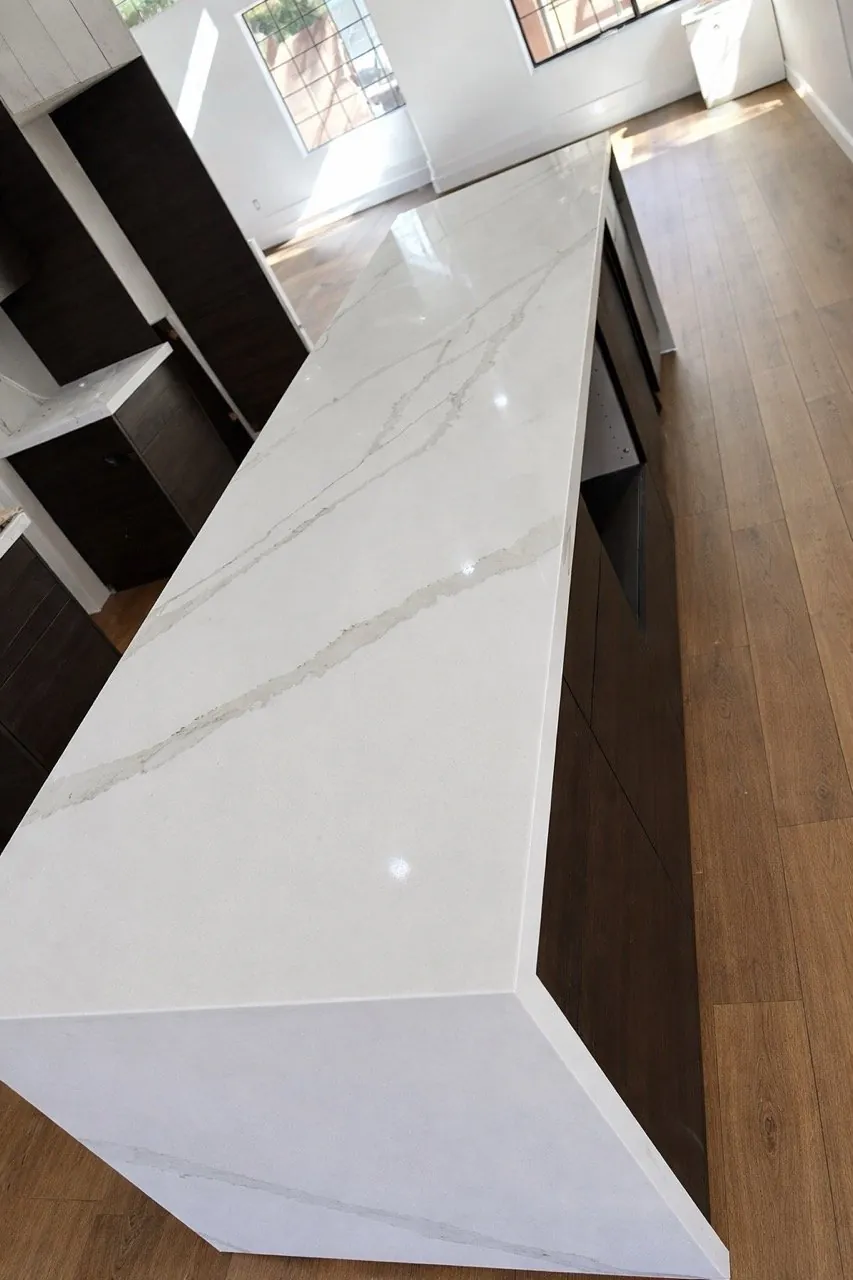
A white quartz island, non-porous and sealing-free, installed by RDC in a Scottsdale kitchen.
Quartz vs. Granite, Side by Side
| Factor | Quartz | Granite |
|---|---|---|
| What it is | Engineered stone (ground natural quartz + resin) | 100% natural stone, quarried in slabs |
| Sealing | Never, non-porous | At install, then periodically |
| Hard-water spotting | Highly resistant | Possible if left unsealed |
| Heat resistance | Good, but use a trivet for hot pans | Excellent heat tolerance |
| Appearance | Consistent, predictable patterns | Unique, no two slabs alike |
| Outdoor kitchens | Standard indoor quartz not recommended (resin can discolor in UV) | Suitable when sealed |
| Installed cost at RDC | $50–$120 / sq. ft. | $45–$100 / sq. ft. |
Please note: these are typical ranges and can vary. Final pricing is set individually for each customer based on your specific project, materials, and scope, confirmed in your free written estimate. Call or text (602) 788-1446, or see financing options.
Why Arizona's Climate Changes the Decision
Phoenix throws two things at a countertop that milder markets don't. First, our tap water is hard.
The City of Phoenix Water Services Department's 2025 water quality data reports 10 to 17.6 grains of hardness per gallon. That can leave mineral spots on unsealed natural stone. Quartz's non-porous surface simply wipes clean.
Second, our sun is intense year-round, so any counter that lives outdoors has to be rated for outdoor use. Standard indoor quartz is not, which is why RDC steers outdoor kitchens toward granite or an outdoor-rated porcelain slab.
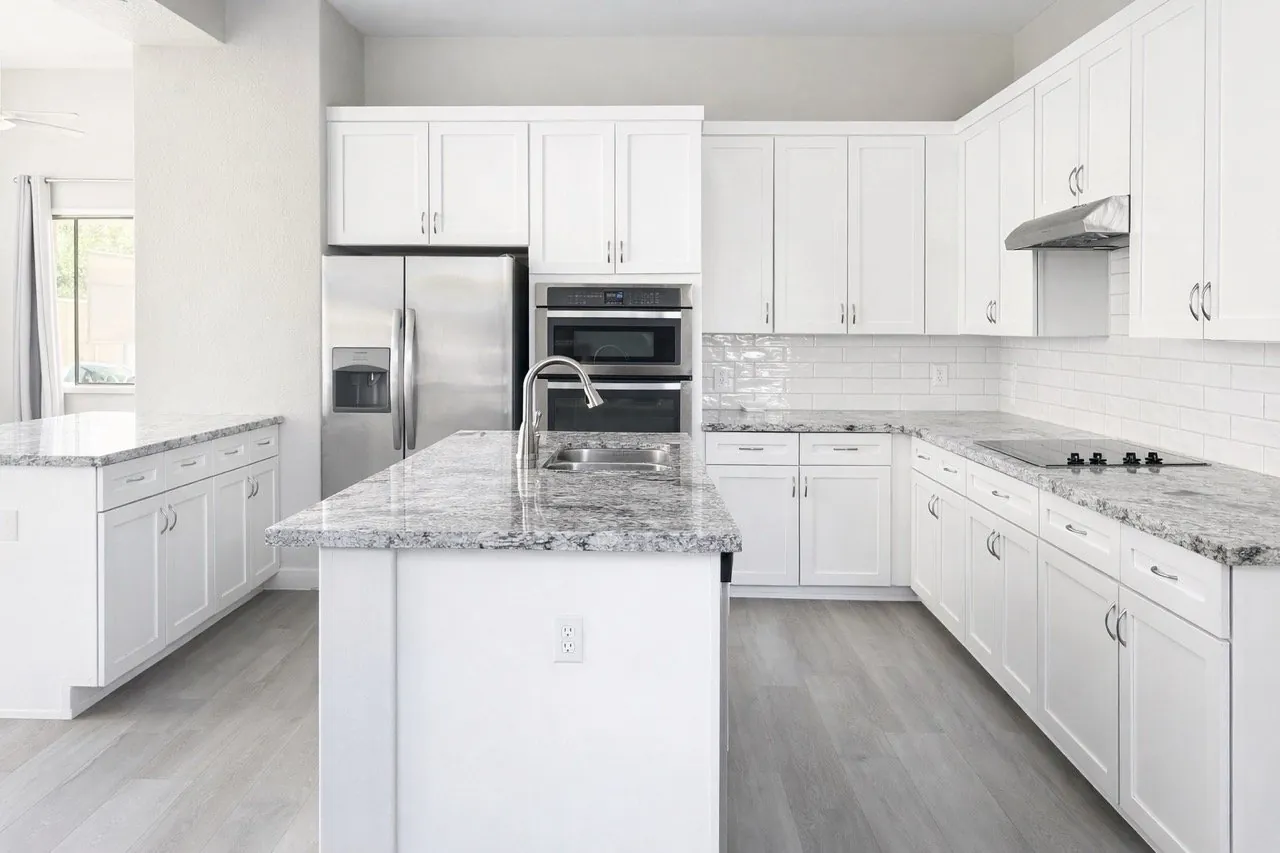
Granite counters with natural-stone character, installed by RDC in a Mesa kitchen.
When Granite Wins
- You love the look of real, natural stone with movement and depth no engineered surface can copy.
- You cook a lot and want the more heat-tolerant surface (a trivet is still a good habit on any stone).
- You're building an outdoor kitchen and want a sealed natural stone that stands up to the patio.
- You want natural stone at a starting price a little below quartz ($45 vs. $50 per sq ft installed).
When Quartz Wins
- You want a surface you never have to seal or baby, ideal for a busy family kitchen.
- You want a consistent, predictable pattern that matches from slab to slab.
- You want strong resistance to Phoenix's hard-water spotting and everyday stains.
- You're doing a bathroom vanity or laundry room where low maintenance matters most.
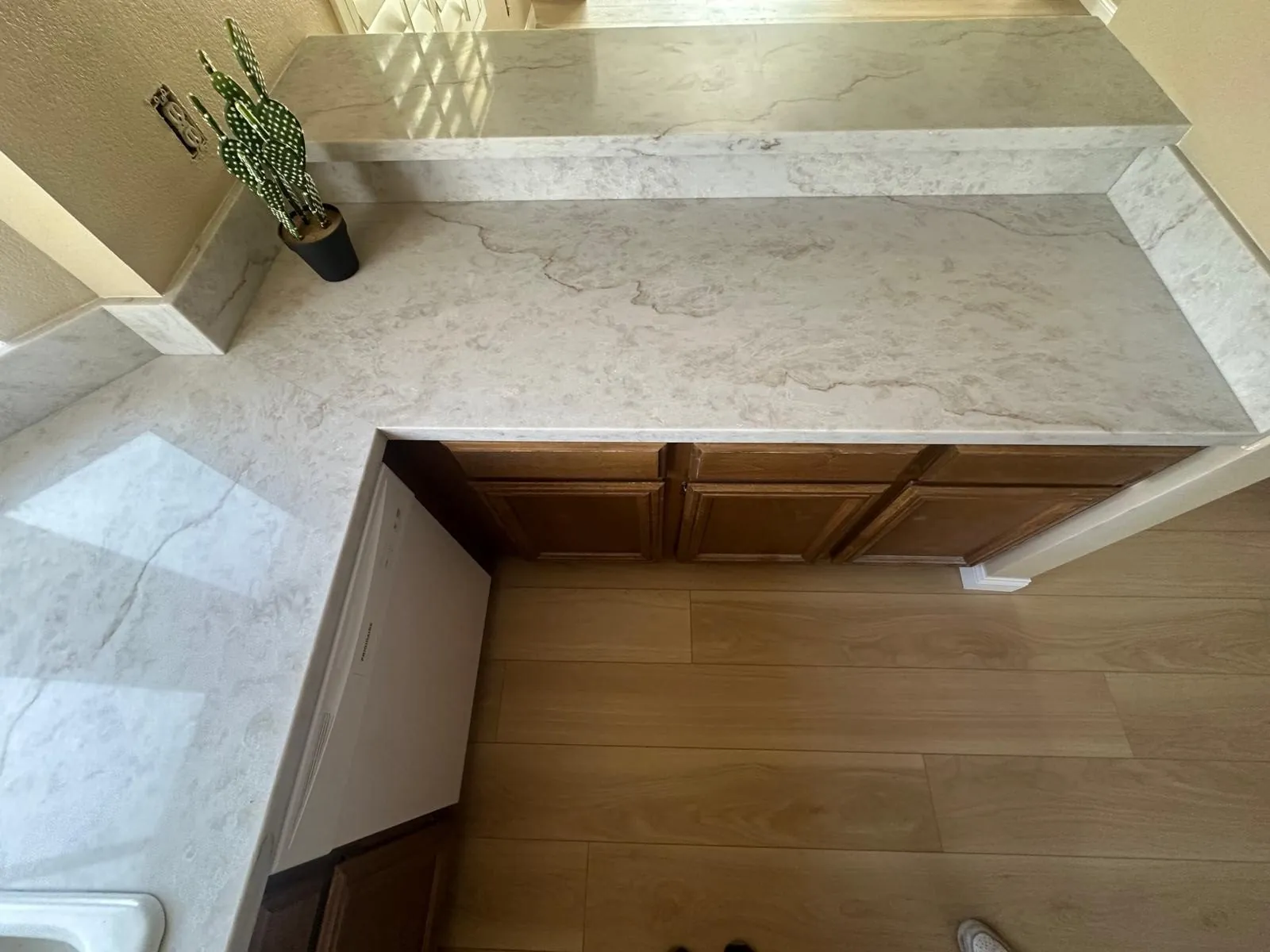
A light veined quartz countertop with a raised bar ledge, installed by RDC in a Phoenix kitchen.
Granite vs. Quartz in Scottsdale: Does the Answer Change?
Does the answer change in Scottsdale? The material physics do not, but the water matters. Scottsdale's 2026 Water Quality Report lists hardness of 13 to 15 grains per gallon south of Indian School Road and 13 to 17 north. So quartz wipes clean and granite should stay sealed.
The same comparison applies in Chandler, Gilbert and across the Valley. See home renovation in Scottsdale.
See Both in Person at the Showroom
The best way to decide is to see the stones in person. At RDC's showroom at 1610 E Bell Rd Suite 101 in Phoenix, you can see quartz and granite along with quartzite, marble and porcelain slab. You choose your actual slab at the showroom, including book-matched slabs, then RDC schedules a free in-home measure and written quote.
Showroom hours: Mon-Fri 10am-5pm, Sun by appointment, Sat closed. Get directions or call or text (602) 788-1446 to book a visit.
RDC is fully insured, is rated 5.0 on Google, and has completed 382+ projects across the Phoenix Valley, each backed by a 1-year workmanship warranty.
For full installed pricing tiers, see the countertop installation cost guide, and if you're planning the whole kitchen, our guide to choosing a kitchen remodeling contractor in Phoenix. Explore all of our countertop installation services, see real project photos, or get a free estimate for your kitchen or bath.