The Quick Verdict
- Pick tile for the coolest floor in summer, the longest lifespan, and a premium, timeless look, ideal for entries, kitchens, and sun-filled rooms.
- Pick LVP for waterproof, scratch-resistant flooring that's softer and quieter underfoot, faster to install, and lighter on the budget.
- Do both: tile in wet and high-traffic zones, LVP through living areas and bedrooms, a plan RDC often quotes.
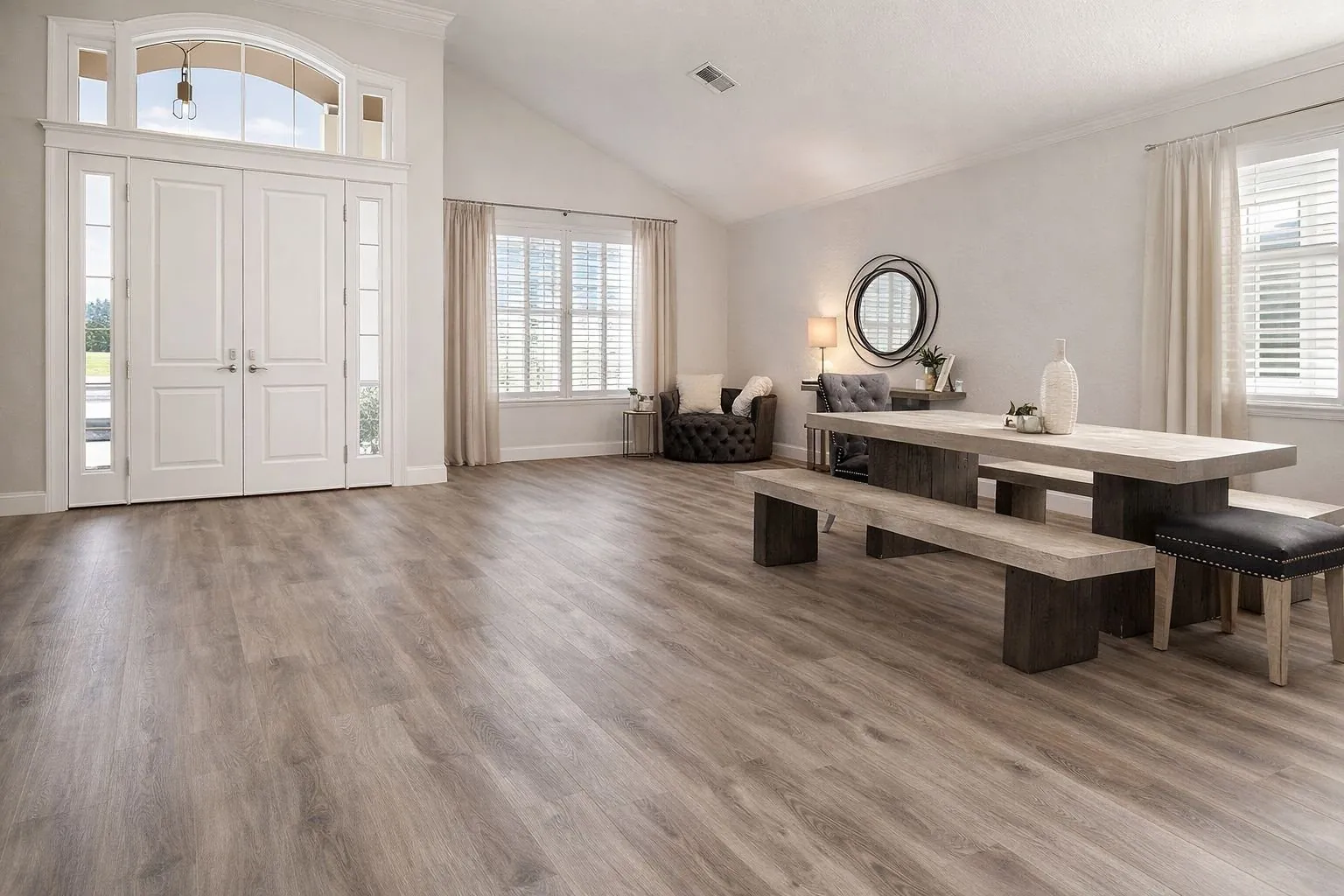
LVP installs quickly with a click-lock system, no grout or long setting time. If you choose LVP, RDC can both supply and install it. See LVP flooring installation in Phoenix.
Is Tile Better Than LVP in Arizona?
Tile is better than LVP in Arizona for staying cool underfoot, for lifespan and for wet, high-traffic zones like entries. LVP is better for comfort when standing, quiet, installation speed and price: $4 to $9 per square foot installed against $7 to $18 for ceramic or porcelain at RDC in Phoenix. Neither wins every room.
The climate points are specific. Tile conducts heat away from the feet, so it feels coolest in a 100-plus-degree summer, while LVP stays closer to room temperature, which some people prefer in January. Both are waterproof, both handle the dry air far better than solid wood, and both need a slab that has been moisture-tested and flattened. Tile needs the flatter slab of the two, especially in large formats with fewer grout lines.
LVP vs. Tile, Side by Side
| Factor | Luxury Vinyl Plank | Porcelain / Ceramic Tile |
|---|---|---|
| Feel underfoot | Softer, warmer, quieter | Hard, coolest in summer |
| Waterproof | Yes | Yes (seal grout lines) |
| Durability | Very good, scratch-resistant | Excellent, lasts decades |
| Installation | Fast, click-lock, no grout | Slower, setting & grouting |
| Cost | Lower installed | Higher installed |
| Comfort for standing | Easier on joints | Firmer underfoot |
| Best rooms | Living, bedrooms, whole home | Entries, kitchens, wet areas |
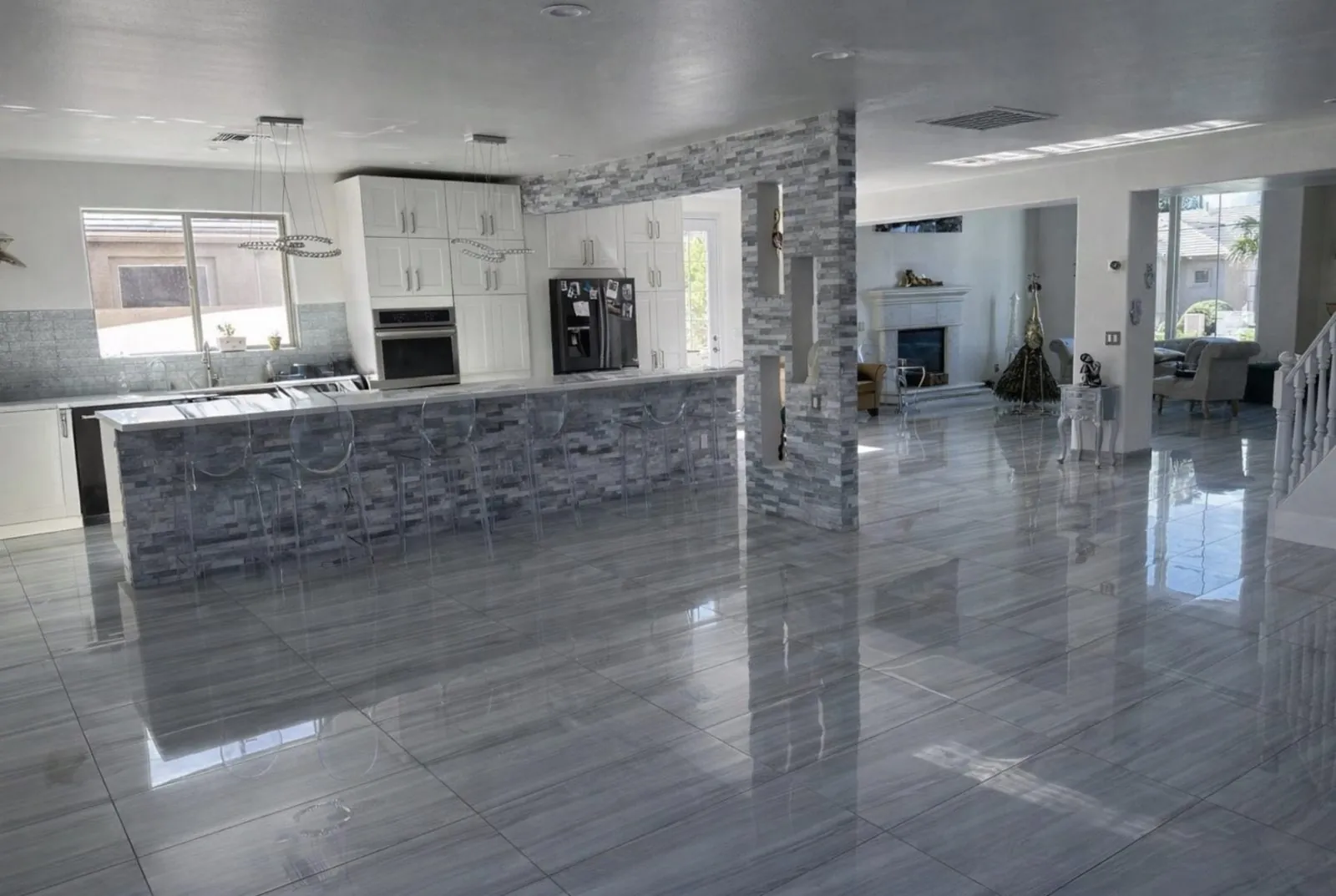
Large-format tile, coolest underfoot and built to outlast the house.
Where Tile Wins
RDC Renovation & Design Concepts is a flooring contractor in Phoenix, Arizona. Tile earns its place because it does two things nothing else matches: it stays genuinely cool underfoot during our brutal summers, and it lasts practically forever. Porcelain and ceramic shrug off scratches, spills and heavy furniture, and porcelain's color is fired into the tile, with no vinyl wear layer for the sun to fade. Large-format tile, in particular, gives a seamless, modern look with fewer grout lines. The trade-offs are a higher installed cost, a harder surface to stand on, and grout lines that need occasional sealing.
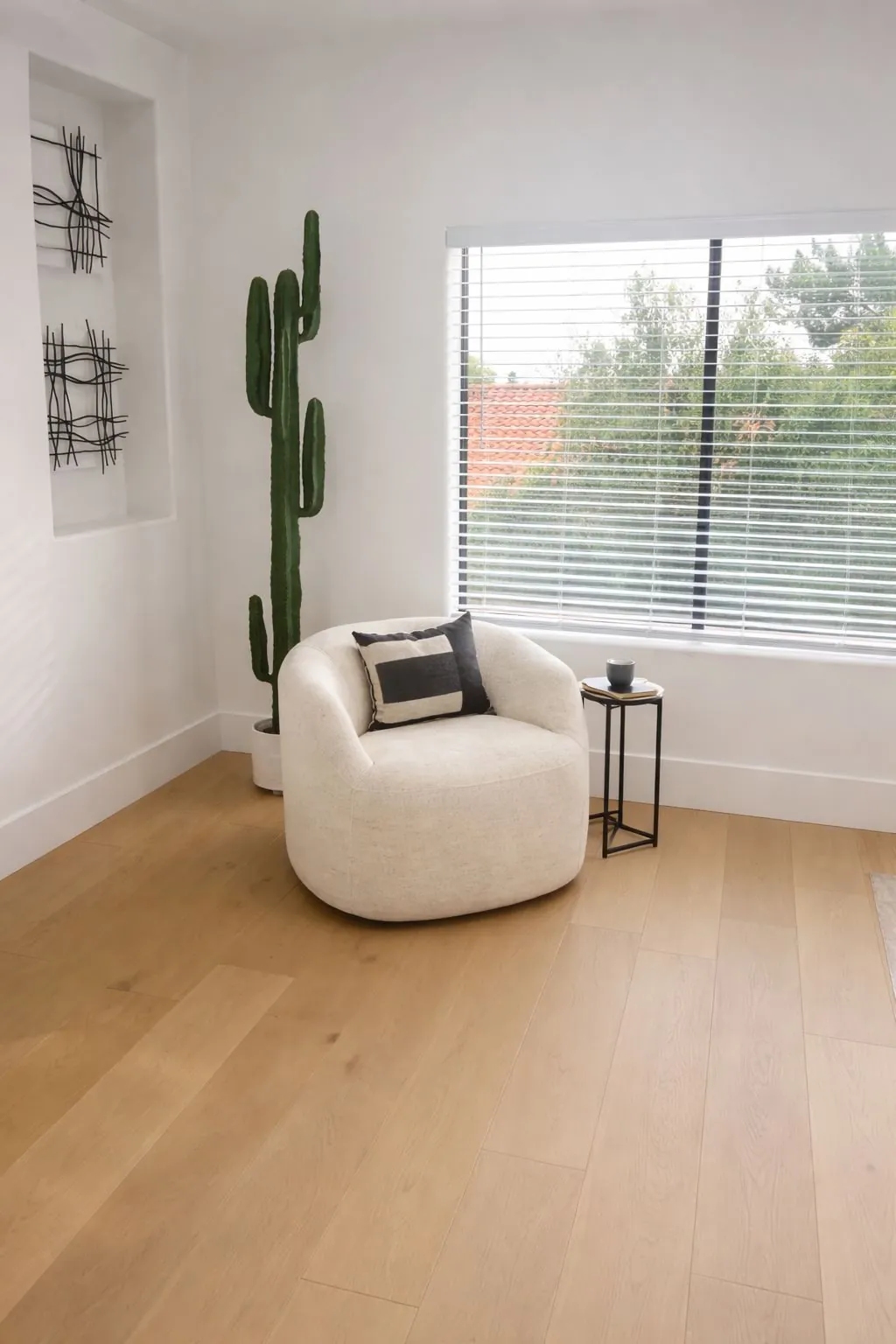
LVP delivers a warm wood look with waterproof, family-friendly performance.
Where LVP Wins
Luxury vinyl plank hits a practical sweet spot in a Phoenix home: waterproof and scratch-resistant like tile, but softer, quieter, and warmer to walk on, and usually cheaper to install. It goes down fast with a click-lock system, so a room can often be finished in a day. The low-sheen matte finishes hide the desert's constant dust, and the wood looks are convincing. For a busy family home, LVP is tough to beat on value.
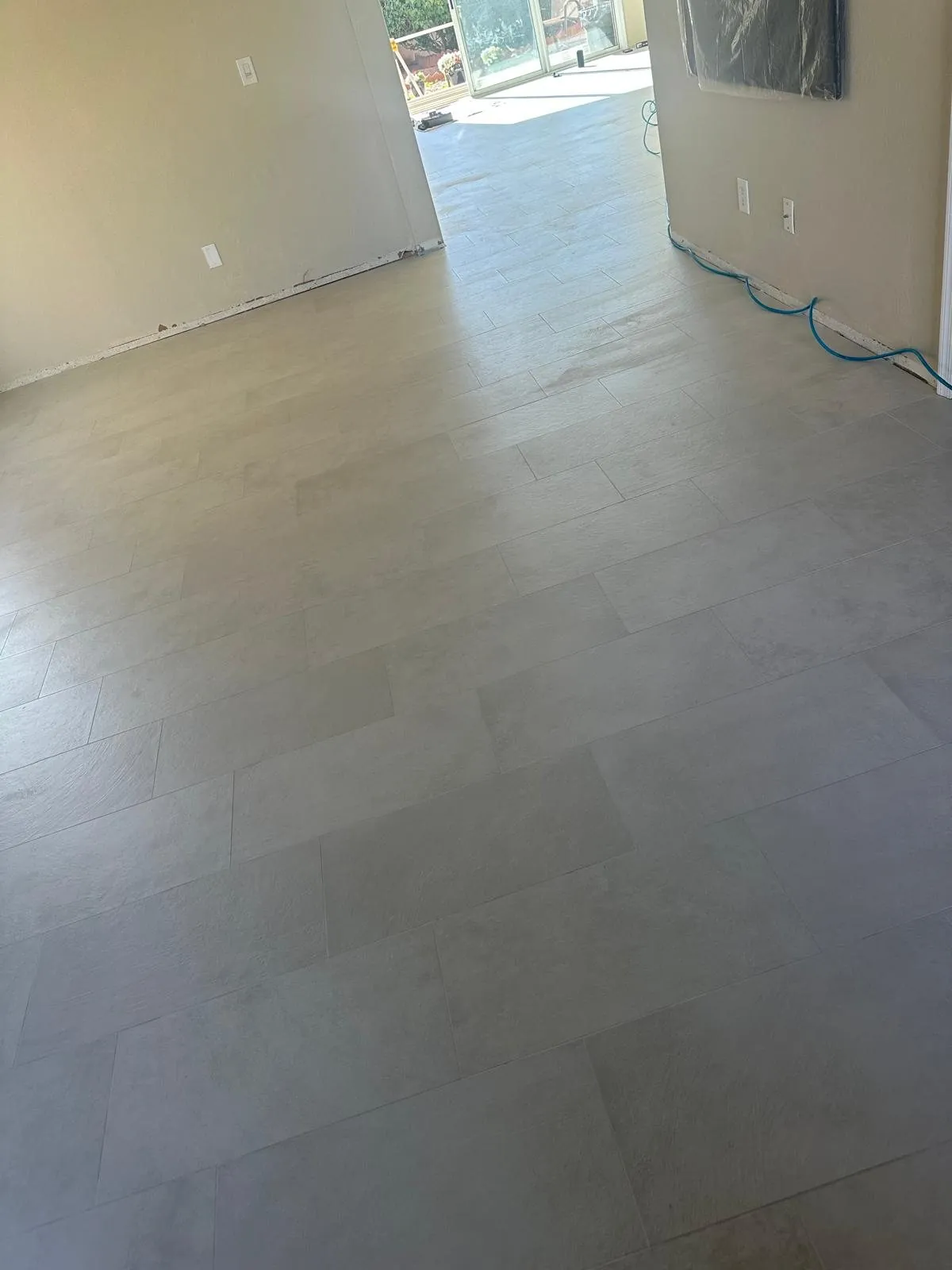
Light large-format tile keeps a room bright and cool through summer.
Tile vs LVP Cost
In the Phoenix area, LVP costs $4 to $9 per square foot installed at RDC, and tile costs more: ceramic $7 to $14, porcelain $9 to $18 and large-format $12 to $22. Tile needs a flatter slab, thinset and grout, and more labor. On 1,000 sq ft that is $4,000 to $9,000 for LVP against $9,000 to $18,000 for porcelain.
| Floor | Per sq ft installed | 1,000 sq ft | 1,500 sq ft |
|---|---|---|---|
| Luxury vinyl plank | $4 – $9 | $4,000 – $9,000 | $6,000 – $13,500 |
| Ceramic tile | $7 – $14 | $7,000 – $14,000 | $10,500 – $21,000 |
| Porcelain tile | $9 – $18 | $9,000 – $18,000 | $13,500 – $27,000 |
| Large-format tile | $12 – $22 | $12,000 – $22,000 | $18,000 – $33,000 |
Removing the old floor costs the same for both, about $3 to $5 per square foot, as listed in the Phoenix Flooring Cost Report 2026. The slab is where they can part ways: large-format tile needs the flattest slab of any floor, so leveling is more likely under tile. The LVP tiers and house totals are broken down on the page how much does LVP flooring cost in Arizona.
Tile vs LVP in the Bathroom
In a bathroom, tile is the long-term choice, and inside the shower RDC builds with tile over a bonded waterproofing membrane. For the bathroom floor outside the shower, quality LVP is also waterproof and warmer underfoot, so either works. Tile makes sense when the shower tile carries on across the floor.
Phoenix water is hard: the City of Phoenix Water Services Department reports 10 to 17.6 grains of hardness per gallon, so grout on a tiled bathroom floor should be epoxy or sealed to keep mineral deposits from showing. LVP has no grout lines to seal. A bathroom floor is small, so the difference between the two is modest: on a 50 sq ft floor the published rates work out to $200 to $450 for LVP and $450 to $900 for porcelain, before removal, and small rooms are priced from the on-site measure. Full shower and bathroom work is on the bathroom remodeling page.
Tile vs LVP in the Kitchen
In a Phoenix kitchen, LVP is usually the better fit when the kitchen opens onto the living area, because one continuous waterproof floor avoids a transition and is easier on the feet during long stretches of standing. Tile is the better fit when the priority is the hardest-wearing surface, one that takes scratches, spills and heavy furniture for decades.
Both floors take spills and daily mopping. LVP is softer and quieter, and a damaged click-lock plank can be replaced on its own without disturbing the floor around it. Tile resists scratches from chair legs and appliance moves and stays cool in summer, with grout lines that need occasional sealing. RDC's kitchen work covers surfaces, so a new kitchen floor is often planned together with new counters; prices for those are on the countertop installation cost page. Whichever floor goes in, the slab under the kitchen gets the same moisture test and flatness check as every other room.
Tile vs LVP in the Living Room
For a Phoenix living room, LVP is the more comfortable pick, warmer and quieter underfoot at $4 to $9 per square foot installed. Porcelain tile, at $9 to $18, is the pick for a living room that takes hard afternoon sun or heavy wear. Running one floor through the living area and kitchen avoids a transition strip either way.
Sun is the Arizona tiebreaker. LVP makers warn that long direct sun can fade a plank and make it expand, and they ask for window coverings and a wider gap at the walls in hot rooms; Shaw also asks for a 1/2 inch gap instead of 1/4 inch once a floating floor covers more than 2,500 sq ft, which open great rooms joined to a kitchen can reach. Porcelain's color is fired into the tile, with no vinyl wear layer for the sun to fade, and the Tile Council of North America defines porcelain as impervious to water, with absorption of 0.5% or less. Tile also shrugs off furniture being dragged, while LVP is kinder to dropped glasses and to feet on a long evening. Details on the sun question are in the best flooring for Arizona heat guide.
Should a Phoenix Home Get Tile or LVP?
In Phoenix, the price gap between the two holds: LVP at $4 to $9 per square foot installed and porcelain at $9 to $18. The house decides the rest. The city's median home was built in 1985, and 49% of its housing went up between 1970 and 1999 (U.S. Census Bureau, American Community Survey 2020-2024 five-year estimates).
Where an old floor has to come out first, removal costs the same $3 to $5 per square foot for either choice. Leveling, at $1 to $4 when the slab needs it, is more likely under large-format tile, so a rough slab widens the gap between the two quotes. To compare them in person, RDC's flooring showroom at 1610 E Bell Rd, Suite 101 in North Phoenix has LVP and tile side by side.
Tile or LVP in Scottsdale, Paradise Valley, Mesa and Peoria?
Neither the prices nor the trade-offs change between these four cities: LVP is $4 to $9 installed and porcelain $9 to $18 everywhere RDC works. What changes is the floor coming out and the slab under it, and that can tip the decision one way or the other in a given house.
- Paradise Valley. Where 1980s or 1990s travertine or saltillo is being replaced, the old tile usually comes out either way, since saltillo is too uneven to cover as it sits. Porcelain keeps a stone look; LVP gives a softer, quieter floor. Paradise Valley flooring.
- Scottsdale. In homes from the 1970s and 1980s (the city's median year is 1991), large-format tile may need slab grinding first, a cost to weigh against LVP. Scottsdale flooring.
- Mesa. Median home 1989; the flatter the slab, the cheaper either floor gets. Mesa flooring.
- Peoria. Median home 1999; a newer, flatter pour suits floating LVP well, after the moisture test. Peoria flooring.
Home ages: U.S. Census Bureau, American Community Survey 2020-2024 five-year estimates.
The Best of Both: Mixing Tile and LVP
You don't have to choose just one. One layout RDC often plans is tile in the entry, bathrooms, and laundry room, where durability and water matter most, with LVP flowing through the living areas and bedrooms for comfort and warmth. Done well, the transitions are clean and intentional. RDC plans these layouts during your free estimate so the two materials meet seamlessly and the whole home feels cohesive.
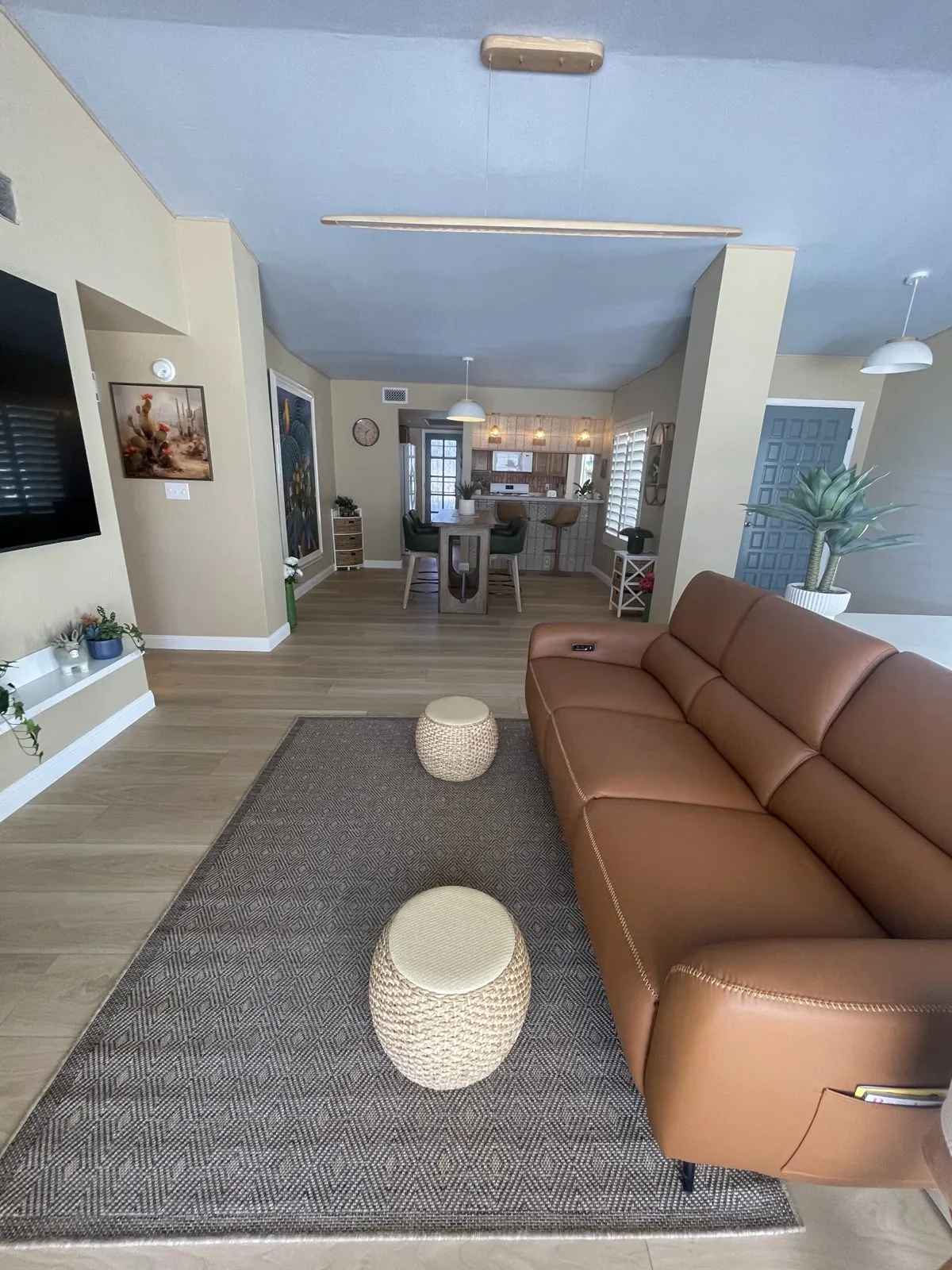
LVP running continuously through an open plan for a warm, seamless look.
Set on LVP? See our dedicated LVP flooring contractor services. You can also learn more about the best flooring for Arizona heat, avoid the flooring mistakes we see in Phoenix homes, see all of our flooring installation services, browse the project gallery, or get a free estimate. Still torn between the two? Put LVP and tile side by side at our Phoenix flooring showroom on Bell Road, where the same team that sells the material installs it.