
Why Quartzite Wins Over Marble for Real Kitchens
RDC Renovation & Design Concepts is a countertop and stone contractor in Phoenix, Arizona. Quartzite gives you the flowing, natural veining people fall in love with in marble, but it performs in a completely different league. Formed from sandstone under intense heat and pressure, it's one of the hardest stones you can put on a counter.
It is generally harder than granite and far more scratch- and etch-resistant than marble. If you've ever wanted the marble look but worried about lemon juice and knife marks, quartzite is built for you.
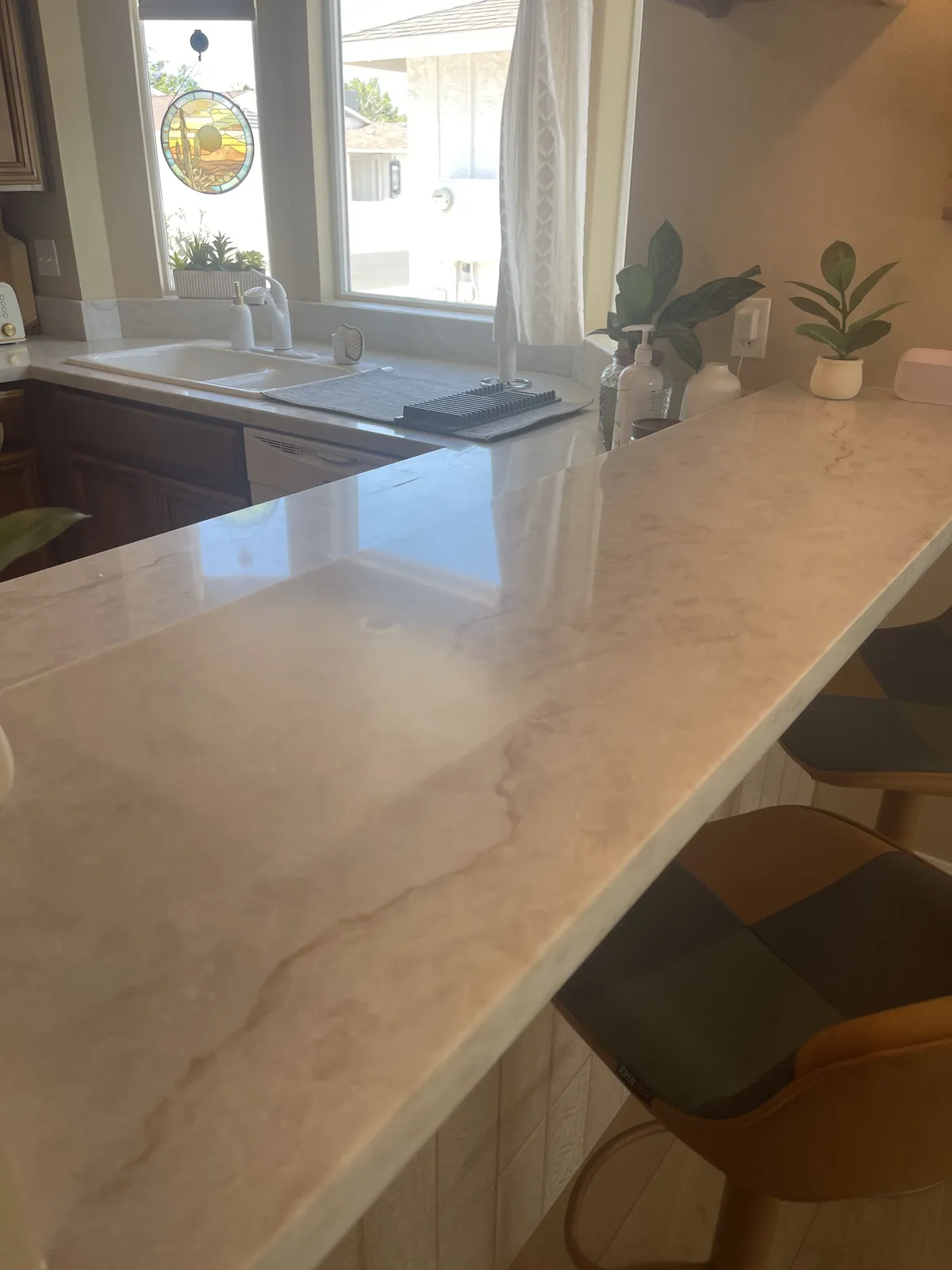
A cream quartz pass-through counter from an RDC kitchen in Phoenix. Quartzite gives a similar light look in natural stone.
Quartzite vs. Quartz: Not the Same Thing
The names cause endless confusion, so here's the clear version. Quartzite is a 100% natural stone, quarried in unique slabs. Quartz is an engineered, man-made surface of ground stone bound with resin. Quartzite gives you a one-of-a-kind natural slab and needs periodic sealing; quartz gives you a uniform, non-porous surface that never needs sealing. Neither is "better", they're different tools, and RDC installs both.
| Factor | Quartzite (natural) | Quartz (engineered) |
|---|---|---|
| Origin | Quarried natural stone | Man-made stone + resin |
| Appearance | Unique slab, marble-like veining | Uniform, consistent patterns |
| Hardness | Very high, generally harder than granite | Very high |
| Sealing | Sealed periodically | Never needs sealing |
| Heat tolerance | Excellent (natural stone) | Good, use trivets (resin) |
Please note: quartzite typically runs $100–$200/sq ft installed (about $5,500–$11,000 for a 55 sq ft kitchen), exotic slabs higher; installed quartz runs $50–$120/sq ft. Final pricing is set individually for each customer based on the actual slab, edge, and scope, confirmed in your free written estimate. Call or text (602) 788-1446, or see financing options.
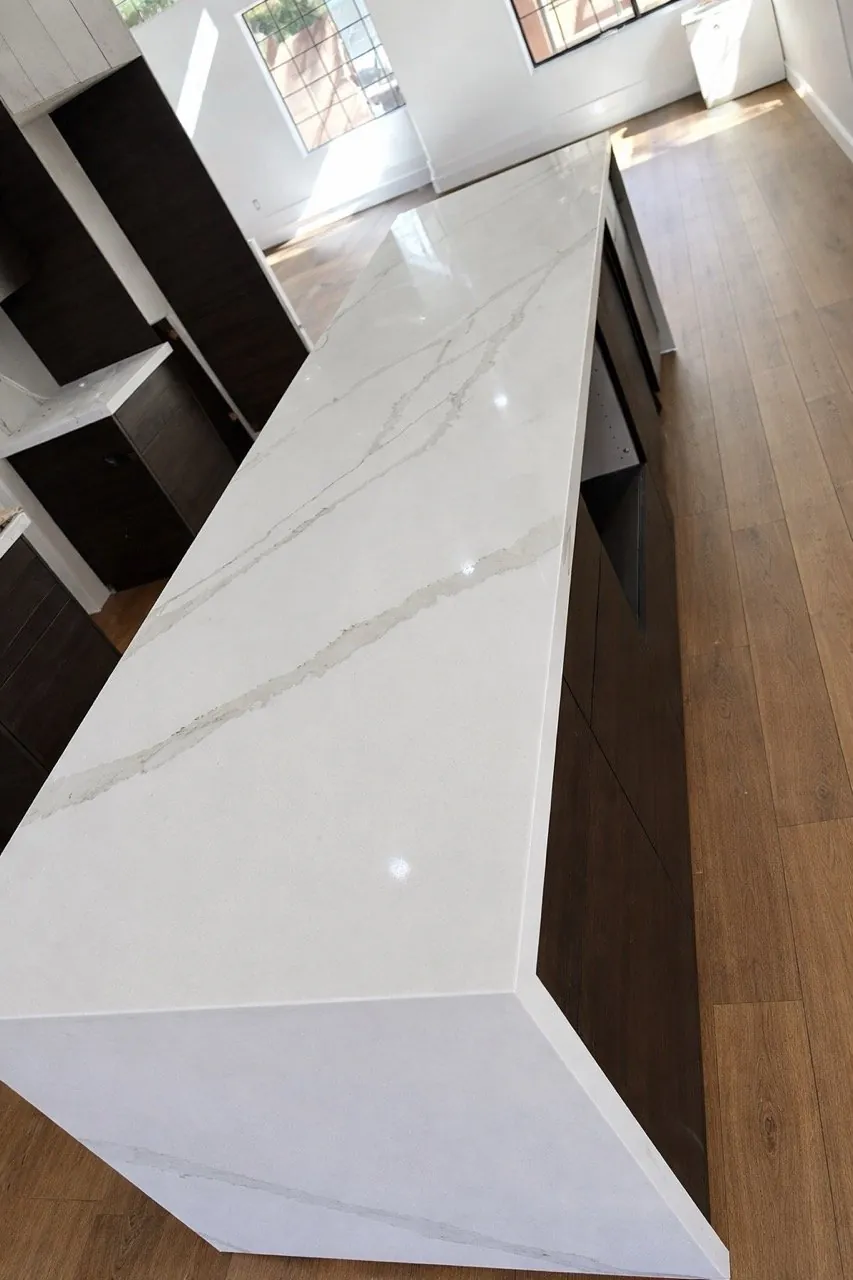
A light island against dark cabinets from an RDC kitchen. This one is quartz; quartzite gives the same high-contrast look with natural veining.
Telling Real Quartzite From Look-Alikes
Here's an honest heads-up: some slabs sold as "quartzite" are actually softer stones like dolomitic marble, which etch more easily. This matters because you're paying for hardness. You choose your actual slab at the Bell Road showroom. RDC can help you look at the slab itself, not just the label, so the durability you're buying is the durability you get.
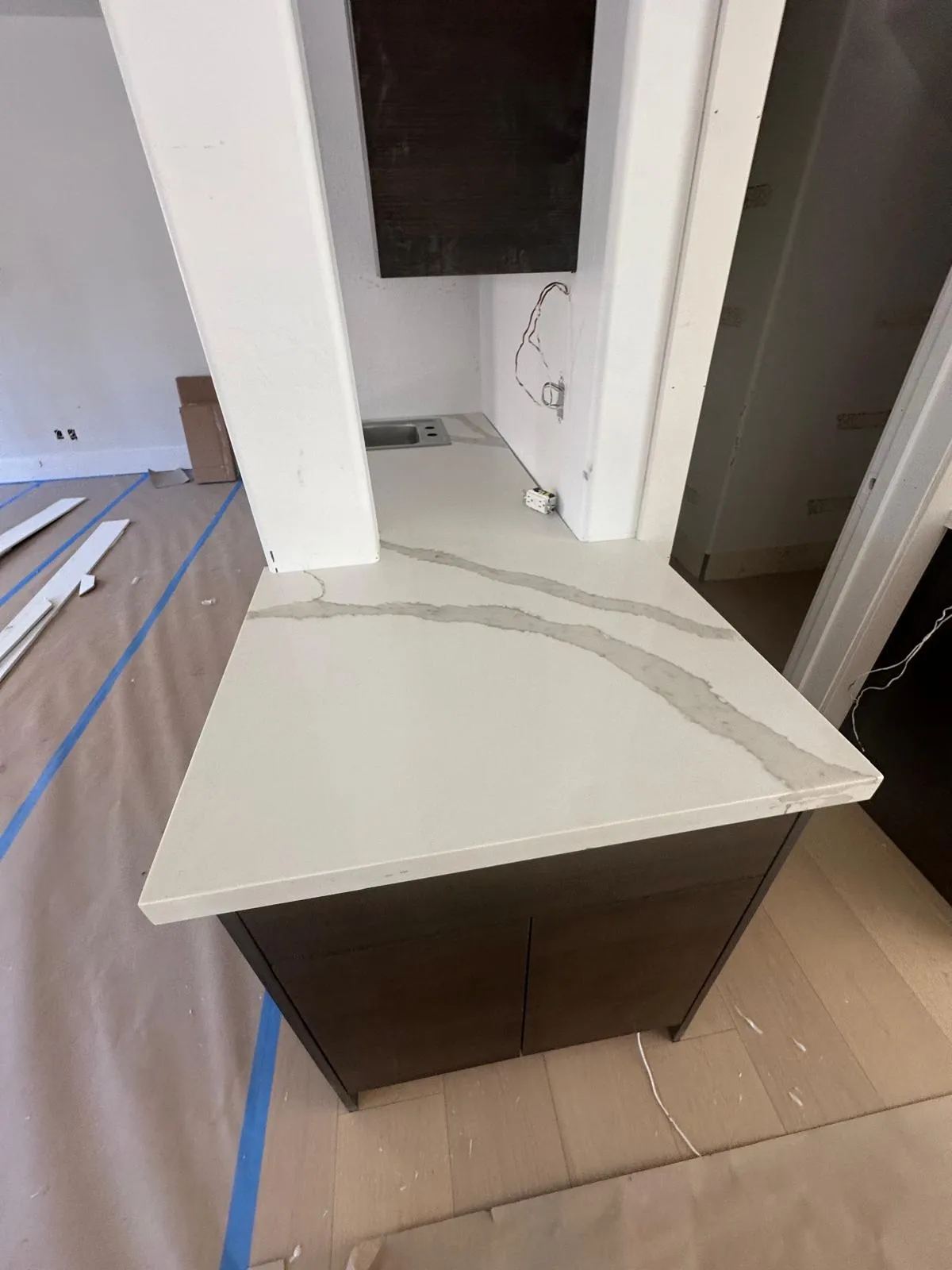
A white quartz counter during installation in Scottsdale (quartz shown; quartzite slabs are chosen one by one).
How Quartzite and Quartz Handle Heat
Beyond hardness, quartzite is a natural stone with no resin binder. Quartz is held together by resin, and quartz makers limit heat exposure. Cambria's quartz warranty, for example, excludes damage from direct or sustained heat and from outdoor installations.
That makes quartzite the stone to compare for a busy Phoenix kitchen, though a trivet is still a good habit on any counter. Read how climate shapes every surface in our Arizona climate renovation guide.
Serving Quartzite Countertops Across the Valley
RDC installs quartzite countertops throughout Phoenix, Scottsdale, Mesa, Chandler, Gilbert, Glendale, Tempe, Peoria, Surprise, Sun City, Sun City West, Paradise Valley, Fountain Hills, Buckeye, Anthem, New River, and Happy Valley. For Scottsdale and Paradise Valley kitchens that want the marble look with more durability, quartzite is the stone to compare first. You choose your slab at the Bell Road showroom, where book-matched slabs are available.
Compare your options in our quartzite vs. marble vs. granite guide and quartz vs. granite guide, see marble countertops, review countertop installation costs, explore all countertop services, or get a free estimate.