
The Four Forces That Shape Every Phoenix Renovation
| Force | What It Does | How RDC Builds Around It |
|---|---|---|
| Extreme heat | Long, hot summers | Cool-underfoot tile, heat-tolerant materials |
| Hard water | 10–17.6 grains/gallon (City of Phoenix) | Grout type chosen for each area |
| Slab-on-grade | Concrete on the ground, no basement | ASTM moisture testing + leveling |
| Intense UV | Fades wood finishes & stained concrete | Porcelain, color fired into the tile (exterior-rated outdoors) |
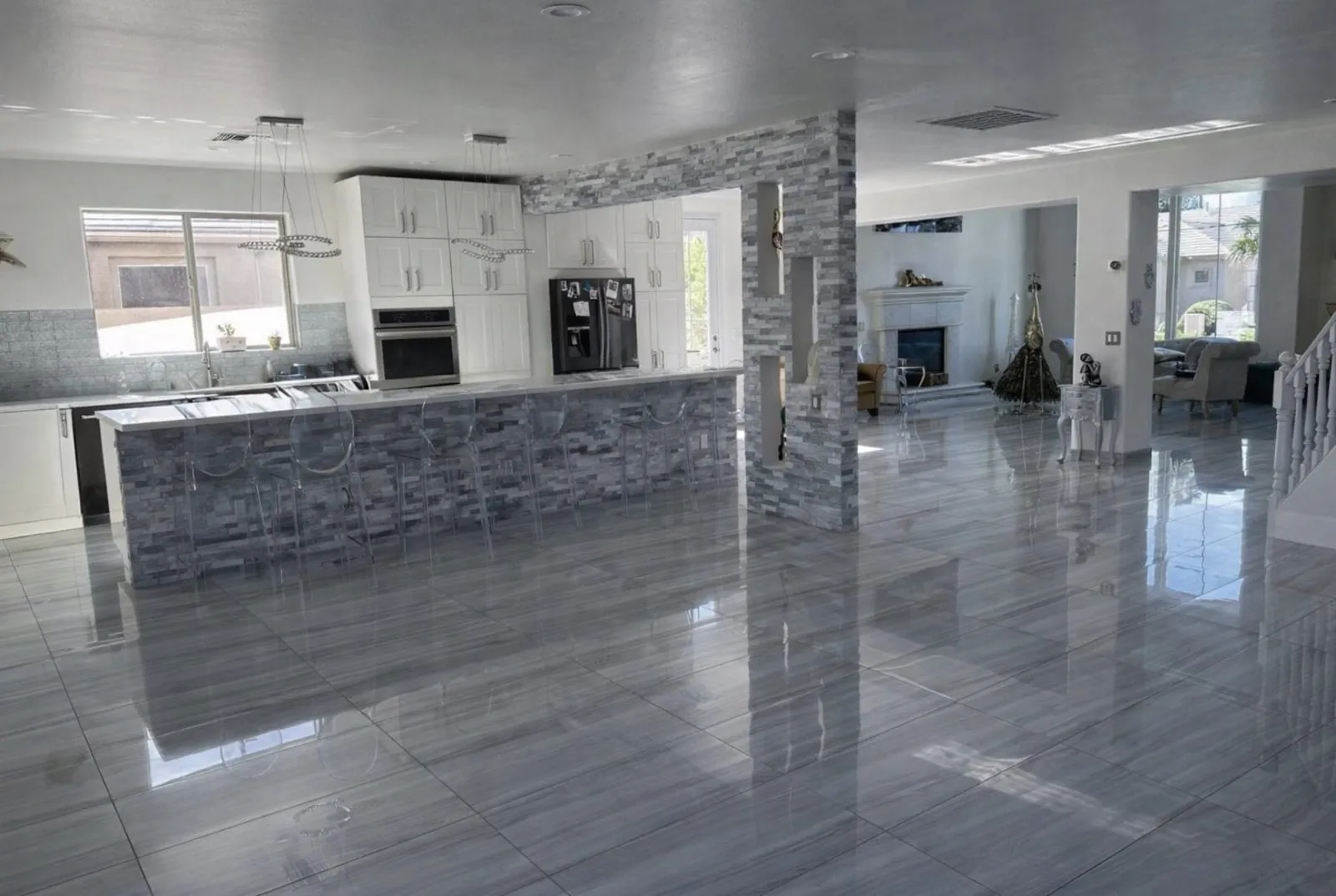
Polished 12x24 tile installed by RDC in a Scottsdale home.
Heat: Why Cool-Underfoot Matters
RDC Renovation & Design Concepts is a flooring, bathroom, and countertop remodeling company in Phoenix, Arizona. Phoenix summers are long and hot, which makes flooring temperature a genuine comfort factor, not a footnote. Porcelain tile and natural stone pull heat away from your feet and feel noticeably cooler than wood, carpet, or vinyl in summer.
A house left closed in summer gets very hot inside, which rewards dimensionally stable materials. Start with our guide to the best flooring for Arizona heat.
Hard Water: The Silent Grout Killer
Phoenix water measures 10 to 17.6 grains of hardness per gallon, per the City of Phoenix Water Services Department, and it leaves white mineral buildup on standard grout, shower glass, and fixtures. That is why RDC chooses the grout for each area with the hard water in mind: cement-based, sealed or epoxy. See how it plays out in bathroom remodeling.
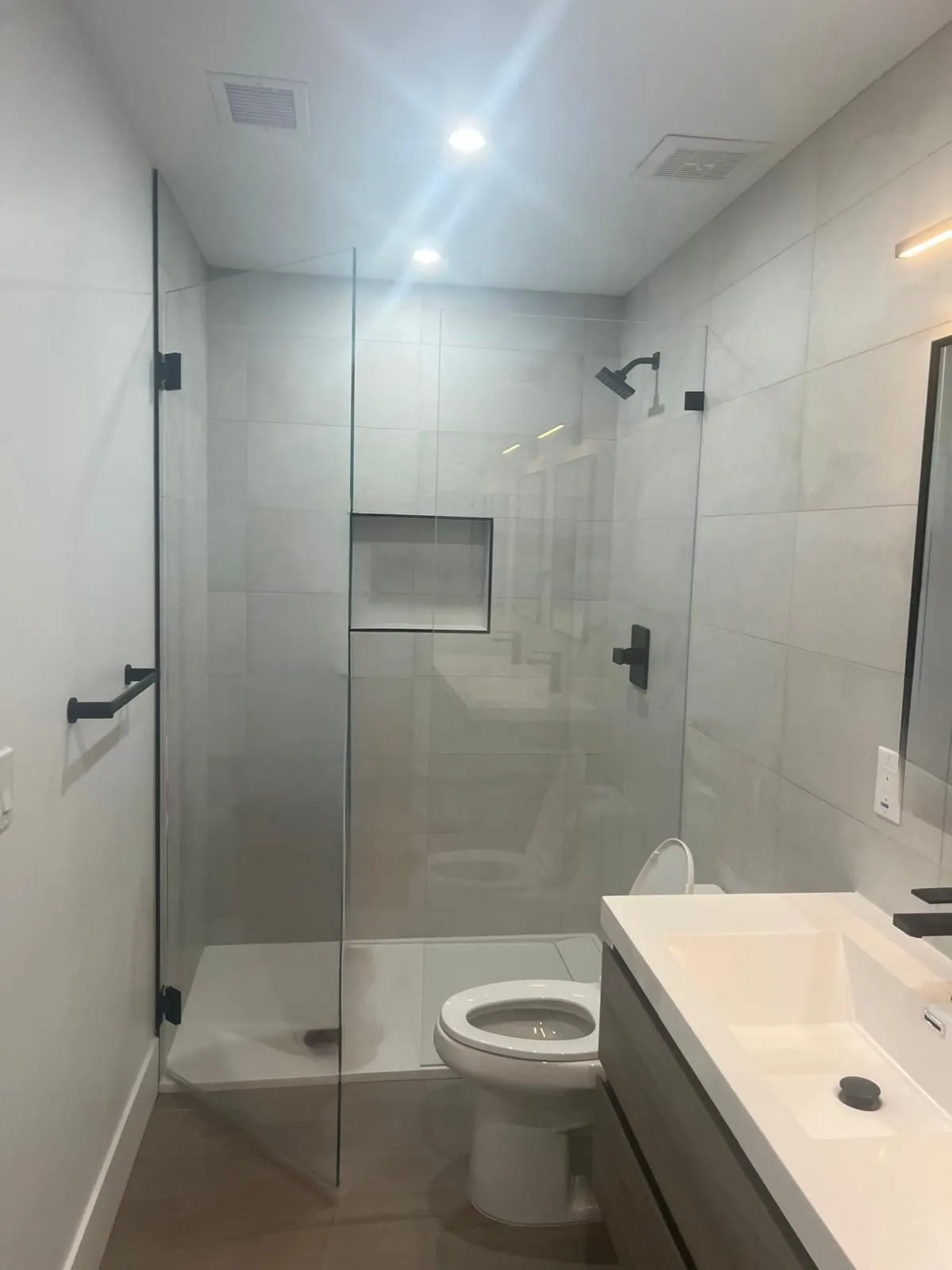
A tub-to-shower conversion RDC tiled in a Scottsdale home; RDC chose its grout with Phoenix hard water in mind.
Slab-on-Grade: The Prep You Never See
The Arizona homes RDC works in sit on slab-on-grade foundations, with the concrete directly on the ground and no basement. Before any floor goes down, the slab must be moisture-tested following ASTM guidelines, ground flat, and leveled. This step is invisible once the floor is in.
Eli Kovalev, RDC's owner, says the mistake he sees most in Phoenix is a new floor laid on a slab nobody tested or leveled. A lowball quote that skips it shows the problem only after the floor is down. It's the first thing to ask any contractor about; read why in our guide to choosing a flooring contractor in Phoenix.
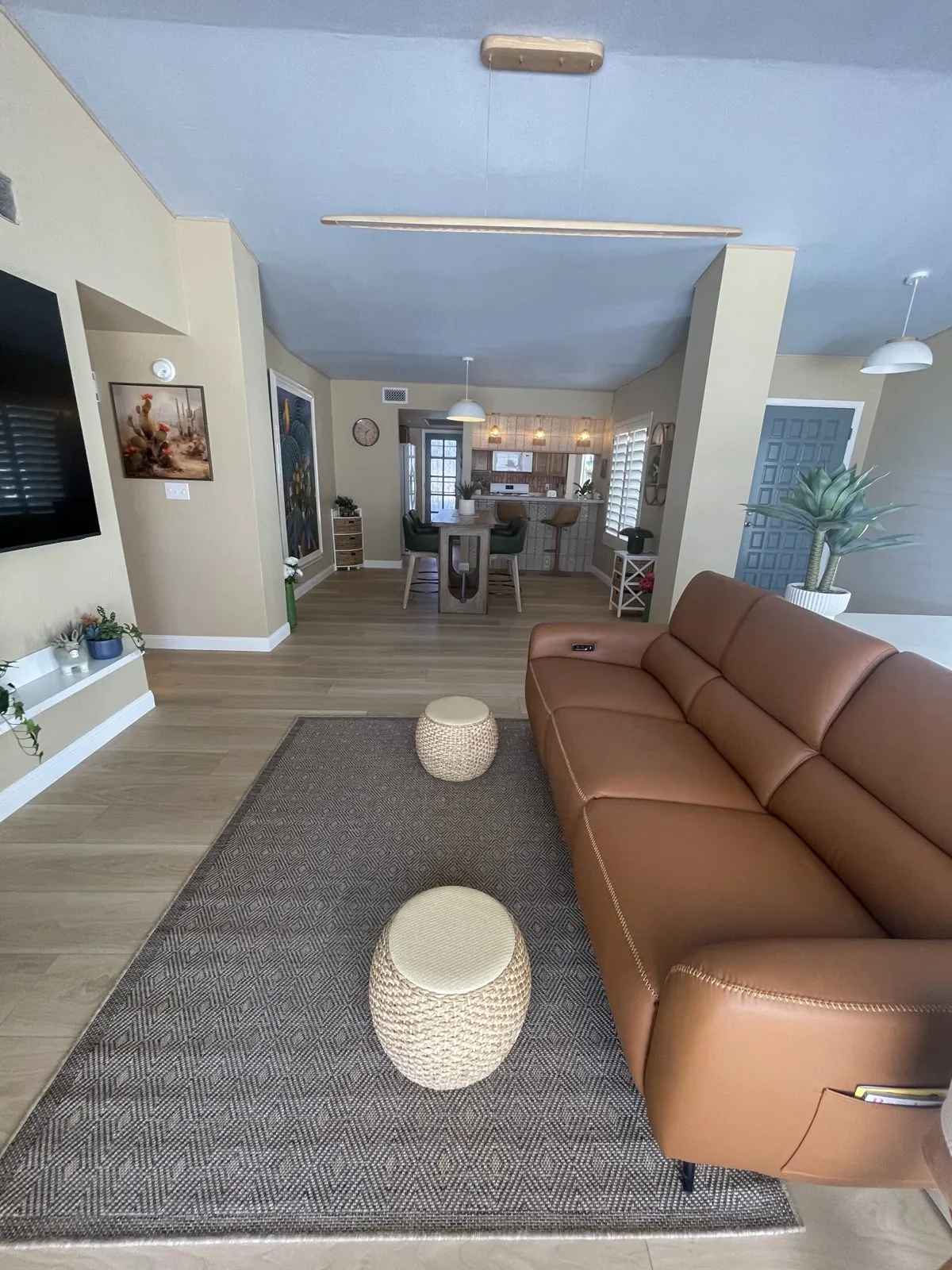
An open-plan floor laid on a tested, leveled slab.
UV & Dry Air: What Fades and What Gaps
Intense UV pours through big desert windows and fades wood finishes and stained concrete, while very dry indoor air shrinks solid wood, opening gaps and squeaks. That's why engineered hardwood outperforms solid wood here, and why RDC uses porcelain, whose color is fired into the tile; outdoors, use one its manufacturer rates for exterior use. Explore engineered hardwood, porcelain tile, and travertine & natural stone for the options that suit the desert.
Explore RDC's Climate-Smart Guides by Room
- Flooring: flooring installation, best flooring for Arizona heat, best flooring for pets, LVP vs. tile.
- Bathroom: bathroom remodeling, tub-to-shower conversion, aging-in-place showers.
- Kitchen: kitchen surfaces, backsplash installation, kitchen remodel cost.
- Countertops: countertop installation, quartzite vs. marble vs. granite, quartz vs. granite.
- Outdoor: pool deck & patio tile.
See how materials perform in the desert at the RDC showroom, 1610 E Bell Rd Suite 101, Phoenix.
Serving Climate-Smart Renovation Across the Valley
RDC renovates homes with Arizona's climate in mind throughout Phoenix, Scottsdale, Paradise Valley, Mesa, Peoria, Arcadia, Cave Creek, Carefree, Fountain Hills, Anthem, Glendale, Chandler, Gilbert, Tempe, Sun City, Sun City West, Surprise, Buckeye, New River, and Happy Valley. Wherever you are in the Valley, the same four forces apply, and RDC builds around them by default rather than as an upsell.
Ready to start with a contractor who builds for the desert? Get a free estimate, call or text (602) 788-1446, browse the project gallery, or explore financing.