
Key takeaways
- At RDC, removing old tile, Saltillo included, costs $3 to $5 per square foot and appears as its own line in the estimate.
- RDC removes tile only together with a new flooring installation, never as a demolition-only job.
- After removal, the thinset is ground off and the slab is checked for moisture and flatness. Leveling, where needed, adds $1 to $4 per square foot.
- LVP is the floor RDC installs most often after tile removal, at $4 to $9 per square foot installed.
- Every RDC removal and new floor is covered by a 1-year workmanship warranty.
Removal and Replacement, One Crew, One Warranty
A new floor laid over thinset ridges left from a rushed removal can click, sound hollow and show bumps. That is why RDC treats removal as part of the installation itself. The same crew that installs your new floor removes the old one, so the result never hangs on somebody else's demolition.
- What we do: remove old tile, haul away the debris, grind the thinset, level and prepare the slab, and install the new floor.
- How it is priced: one written estimate with the removal as a clear line item, no separate demolition contract.
- What we do not do: demolition-only jobs with no new floor going in. For that, a dedicated demolition company is the right call. If a new floor is part of the plan, even later, RDC quotes the removal and the new floor together.
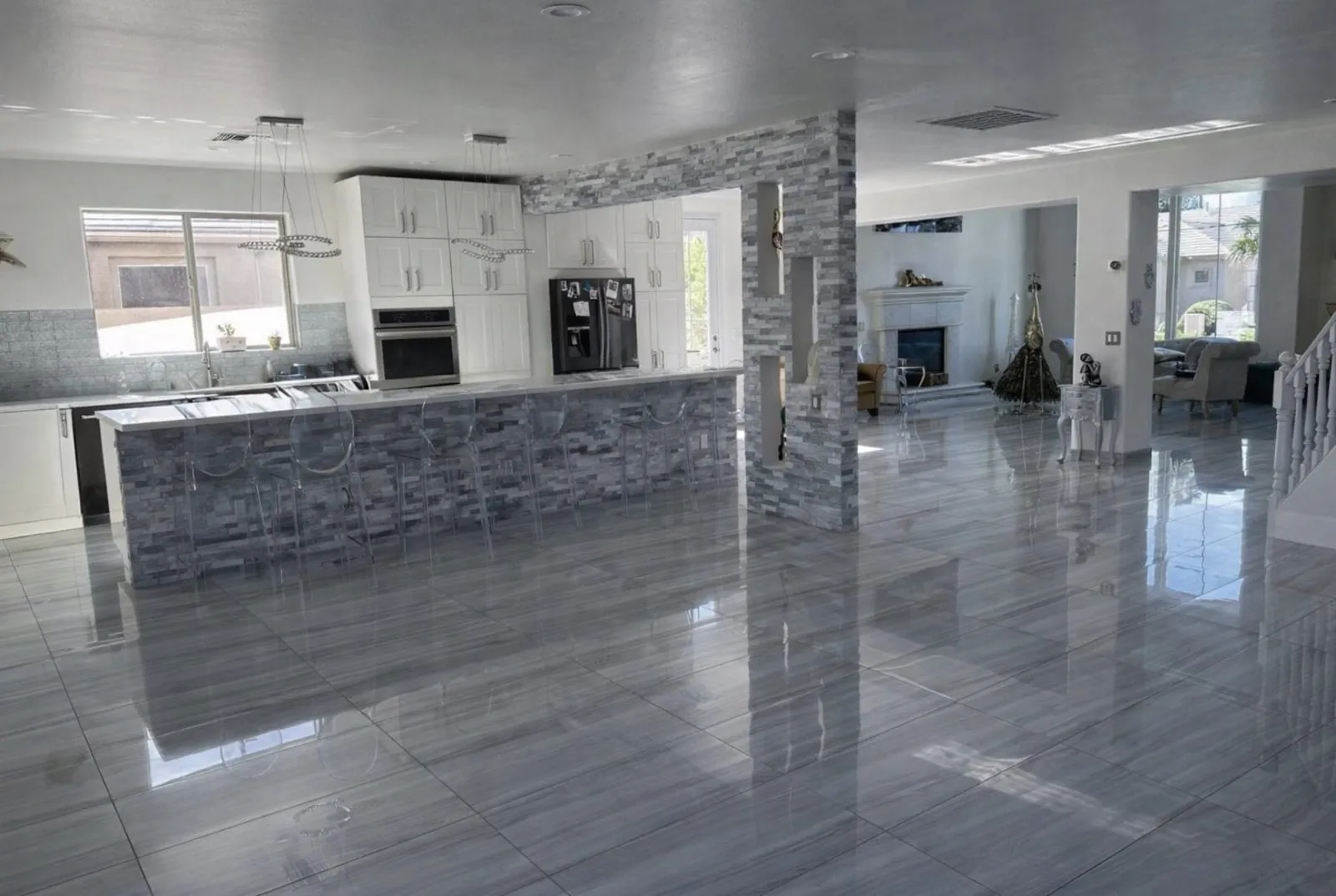
A finished tile floor: polished 12x24 tile through an open-concept Scottsdale home, installed by RDC.
How Much Does Tile Removal Cost in Phoenix?
Tile removal in Phoenix costs $3 to $5 per square foot at RDC Renovation & Design Concepts, Saltillo included. RDC quotes it only together with the new floor. On a 1,500 sq ft home, that is $4,500 to $7,500 for the removal. Slab leveling, where the slab needs it, adds $1 to $4 per square foot.
| Project | Tile removal ($3 to $5) | New floor installed | Total before leveling |
|---|---|---|---|
| 1,000 sq ft, new LVP | $3,000 to $5,000 | $4,000 to $9,000 ($4 to $9) | $7,000 to $14,000 |
| 1,500 sq ft, new LVP | $4,500 to $7,500 | $6,000 to $13,500 ($4 to $9) | $10,500 to $21,000 |
| 1,500 sq ft, new porcelain | $4,500 to $7,500 | $13,500 to $27,000 ($9 to $18) | $18,000 to $34,500 |
| 2,000 sq ft, new LVP | $6,000 to $10,000 | $8,000 to $18,000 ($4 to $9) | $14,000 to $28,000 |
Leveling at $1 to $4 per square foot is added only where the bare slab needs it. Final pricing is set individually for each customer based on their specific project.
Where a job lands in the $3 to $5 range depends on the tile type, the thinset under it and access to the rooms. Moving furniture and appliances and pulling and resetting toilets are included. Baseboards are a separate line.
Call or text (602) 788-1446 for a free written estimate. RDC measures your home for free and lists the removal, the leveling and the new floor as separate lines.
How Tile Removal Works, Step by Step
On a concrete slab, old tile is bonded with thinset mortar that has baked hard for years, sometimes decades. Getting the tile up is the easy half. The work that decides how your new floor performs is what happens next.
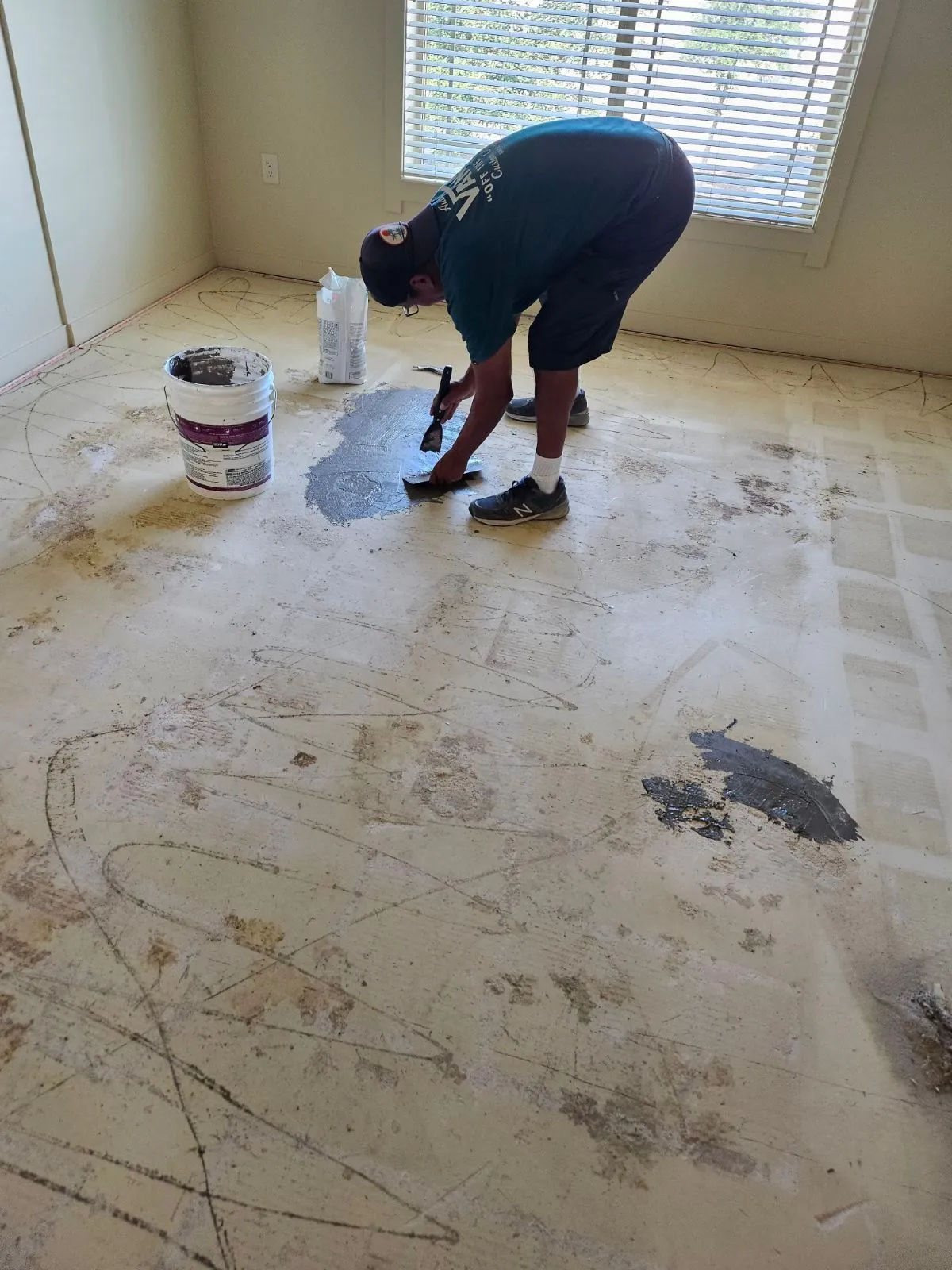
The step that decides everything: the bare slab, cleaned and patched flat before any new floor goes down.
- Dust containment. Breaking tile and grinding mortar creates fine dust that open floor plans and air returns spread through the whole house. RDC contains the work area and covers the vents in the zone before the first tile comes up.
- Breaking the tile free. Crews break the tile off the slab with demolition hammers. A layer of ridged thinset stays bonded to the concrete.
- Thinset grinding. That ridged mortar has to be ground off until the slab is flat. Skipping or rushing this step is a shortcut that shows up later as bumps in the new floor.
- Haul-away. Tile removal produces a lot of heavy debris. Bagging, removing and disposing of it is part of RDC's scope, not your weekend.
- Slab inspection and leveling. With the slab bare, cracks, moisture issues and low spots are visible for the only time in the project. RDC checks for all three and levels where needed, at $1 to $4 per square foot. A moisture test (ASTM F710) matters most when LVP or wood goes down next.
- The new floor. The slab is cleaned before any new material comes in, and the same crew installs the new floor. Every step is documented with progress photos you can see from start to finish.
Do Old Floor Tiles Have Asbestos?
Some older floors do: the EPA lists vinyl floor tiles, the backing on vinyl sheet flooring, and adhesives among the products that may contain asbestos. You cannot tell by looking. In a Phoenix home, suspect tile or adhesive is sampled and tested by an accredited lab before anyone breaks it up. RDC does not disturb suspect material until then.
- Leave it alone and test first. The EPA advises not to touch suspect material. It says a trained and accredited asbestos professional should take the samples, not the homeowner (EPA, Protect Your Family).
- An accredited lab. Maricopa County's asbestos guide sends samples to a lab accredited under NVLAP, the National Voluntary Laboratory Accreditation Program. Material with more than 1% asbestos counts as asbestos-containing material (Maricopa County asbestos pamphlet).
- Which homes the county rules cover. Maricopa County Rule 370 exempts a single owner-occupied residential parcel with four or fewer detached dwelling units. Apartment, townhome and condominium complexes with more than four units are covered (Rule 370).
- If the test is positive. Removal is work for an asbestos abatement contractor. The EPA says removal must be done only by a trained and accredited asbestos professional. When regulated asbestos-containing material at or above the county thresholds is removed, the county requires AHERA-certified workers and an AHERA-certified supervisor on site.
- Where RDC fits. RDC does not remove asbestos. When a test comes back positive, a certified asbestos abatement contractor handles it first. RDC then removes the remaining floor and installs the new one.
Exempt or not, the EPA's advice to homeowners is the same: do not sand or try to level asbestos flooring or its backing. Shaw's installation guidelines also tell installers to presume old resilient flooring contains asbestos unless they are certain it does not. Sources: EPA, Learn About Asbestos; Maricopa County Air Quality Department, Asbestos; Shaw Floorte installation guidelines.
What Goes In After the Old Tile Comes Out
Once the slab is clean and flat, it can take any floor. These are the replacements RDC installs after tile removal, with RDC's installed price ranges:
| New Floor | Installed / sq. ft. | Why homeowners switch to it |
|---|---|---|
| Luxury vinyl plank (LVP) | $4 to $9 | Warmer and quieter than tile, with a waterproof core; the floor RDC installs most often after tile removal |
| New porcelain / ceramic tile | $7 to $18 | Formats from 12x24 up, plus wood-look porcelain planks |
| Engineered hardwood | $8 to $16 | Real wood over concrete: engineered planks are designed for on-grade slabs (NWFA) |
| Carpet (bedrooms) | $3 to $7 | Softness in bedrooms, paired with hard flooring elsewhere |
Please note: these are typical ranges and can vary. The removal itself appears as its own line in your estimate, priced by tile type, thinset condition, and access. Final pricing is set individually for each customer in your free written estimate.
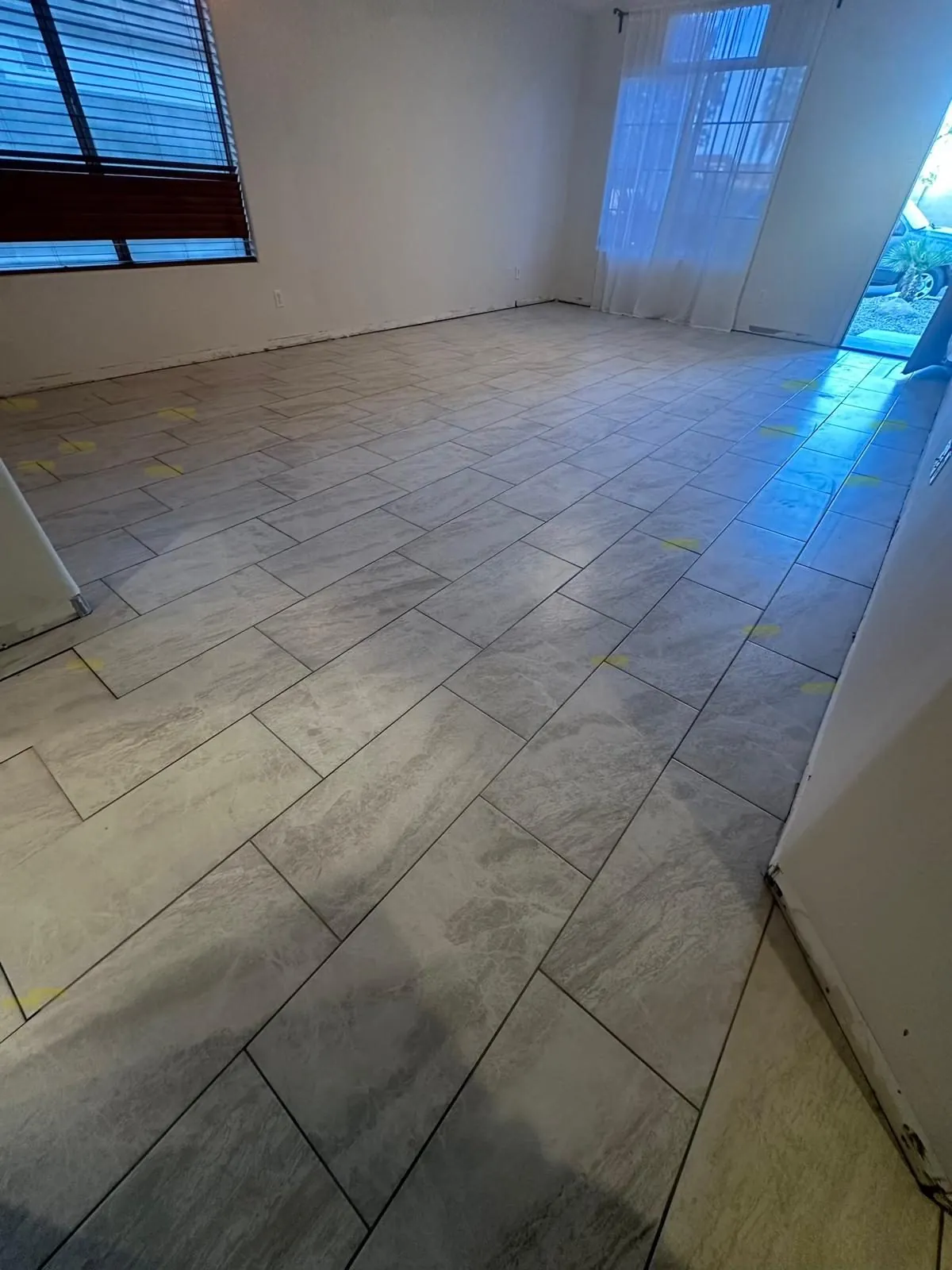
Old tile out, new 12x24 porcelain in: an RDC tile replacement in a Phoenix living room.
The full price list, including whole-house totals, is in the Phoenix Flooring Cost Report 2026. What happens to the slab after the tile comes up is on the slab prep and moisture testing page.
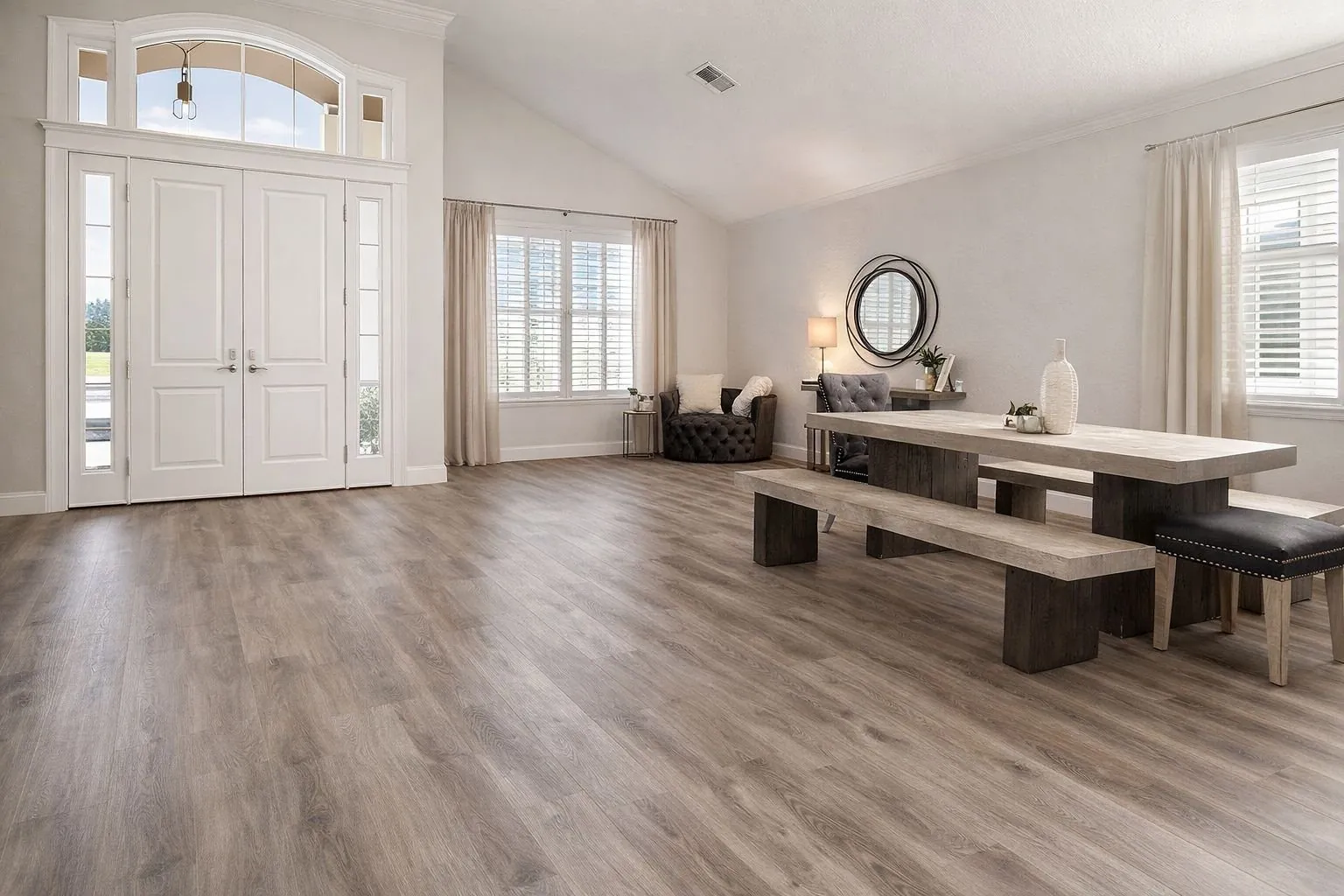
Finished LVP floor, the most common tile replacement RDC installs.
Tile Removal in Phoenix Homes
Tile removal in Phoenix starts with the age of the house. The median Phoenix home was built in 1985, and 49% of the city's housing went up from 1970 to 1999 (U.S. Census Bureau, ACS 2020-2024, tables B25035 and B25034). If your house still has its original tile, its removal is quoted as a separate line at $3 to $5 per square foot.
RDC's Phoenix jobs include an old tile floor replaced with 12x24 porcelain in a living room. In another Phoenix home, RDC swapped Saltillo tile and carpet for wood-look LVP, stairs included. LVP on stairs runs $100 to $185 per step, including carpet removal, installation and the stair nose.
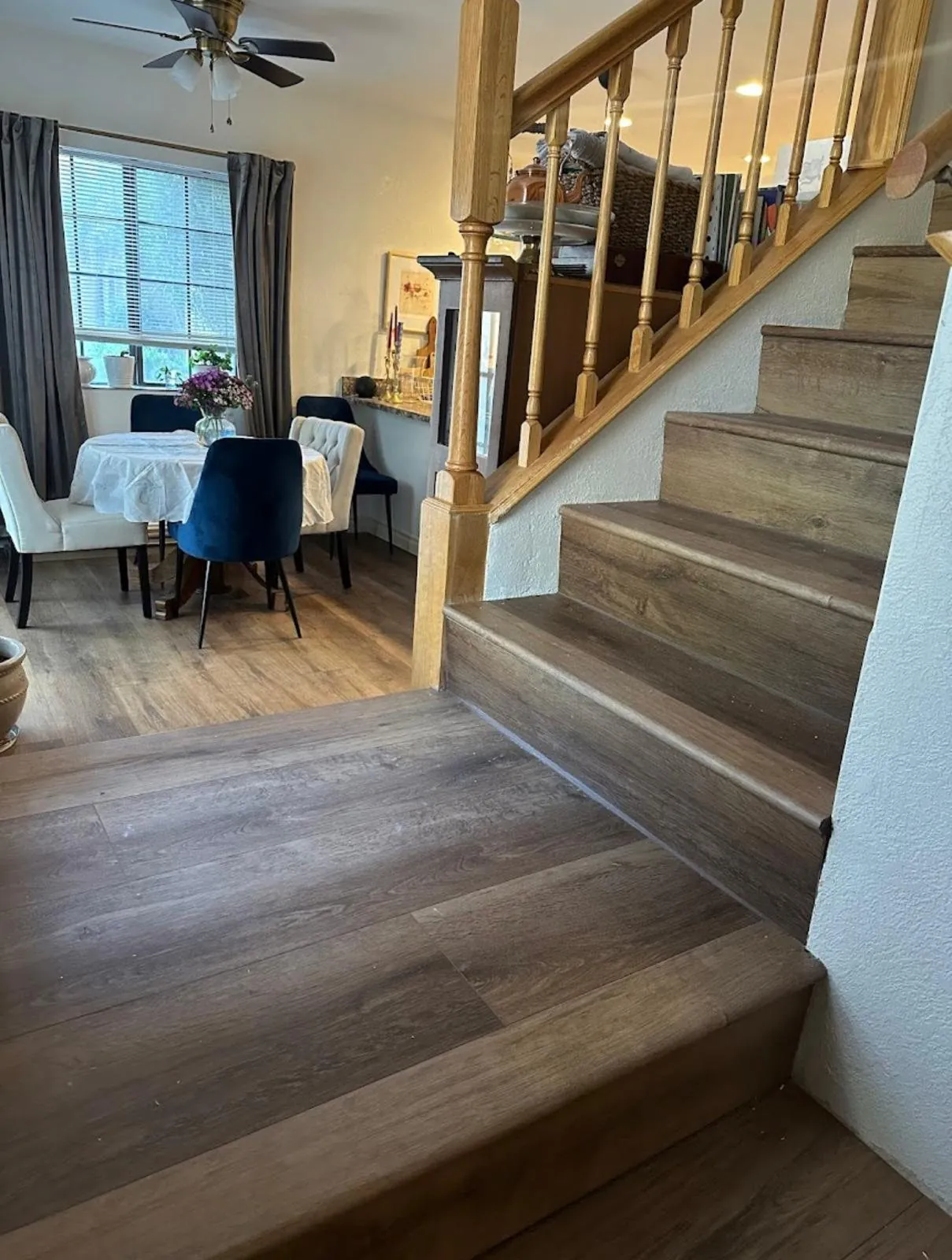
Saltillo and carpet out, wood-look LVP in, stairs included: an RDC job in a Phoenix home.
North Phoenix and the Bell Rd Showroom
RDC's showroom is at 1610 E Bell Rd, Suite 101, in North Phoenix. It is open Sunday to Friday, 10 AM to 5 PM, and closed Saturday. Full-size planks and tiles for every replacement floor on this page are on display at our flooring store in Phoenix on Bell Road. Samples go home free.
Choose the new floor there, and RDC measures your home for free. The removal and the new floor then go on one written estimate.
Tile Removal in Scottsdale, Paradise Valley, Mesa and Peoria
- Scottsdale. Scottsdale's median home dates from 1991, and 58% of its housing was built from 1970 to 1999 (ACS). RDC has set 12x24 tile over prepared slabs in Scottsdale homes, shown on this page. See flooring and tile in Scottsdale.
- Paradise Valley. Paradise Valley's median home was built in 1985 (ACS). Where an older travertine or Saltillo floor is still in place, its removal at $3 to $5 per square foot comes before the new floor. See tile removal in Paradise Valley.
- Mesa. Mesa has the largest share of 1970-1999 housing of these four cities, 61%, with a median build year of 1989 (ACS). RDC serves Mesa from the Bell Rd showroom. See flooring installation in Mesa.
- Peoria. Peoria's homes are the newest of the four, with a median build year of 1999 (ACS). RDC has removed old tile in a Peoria home and installed LVP in its place. See Peoria renovation.
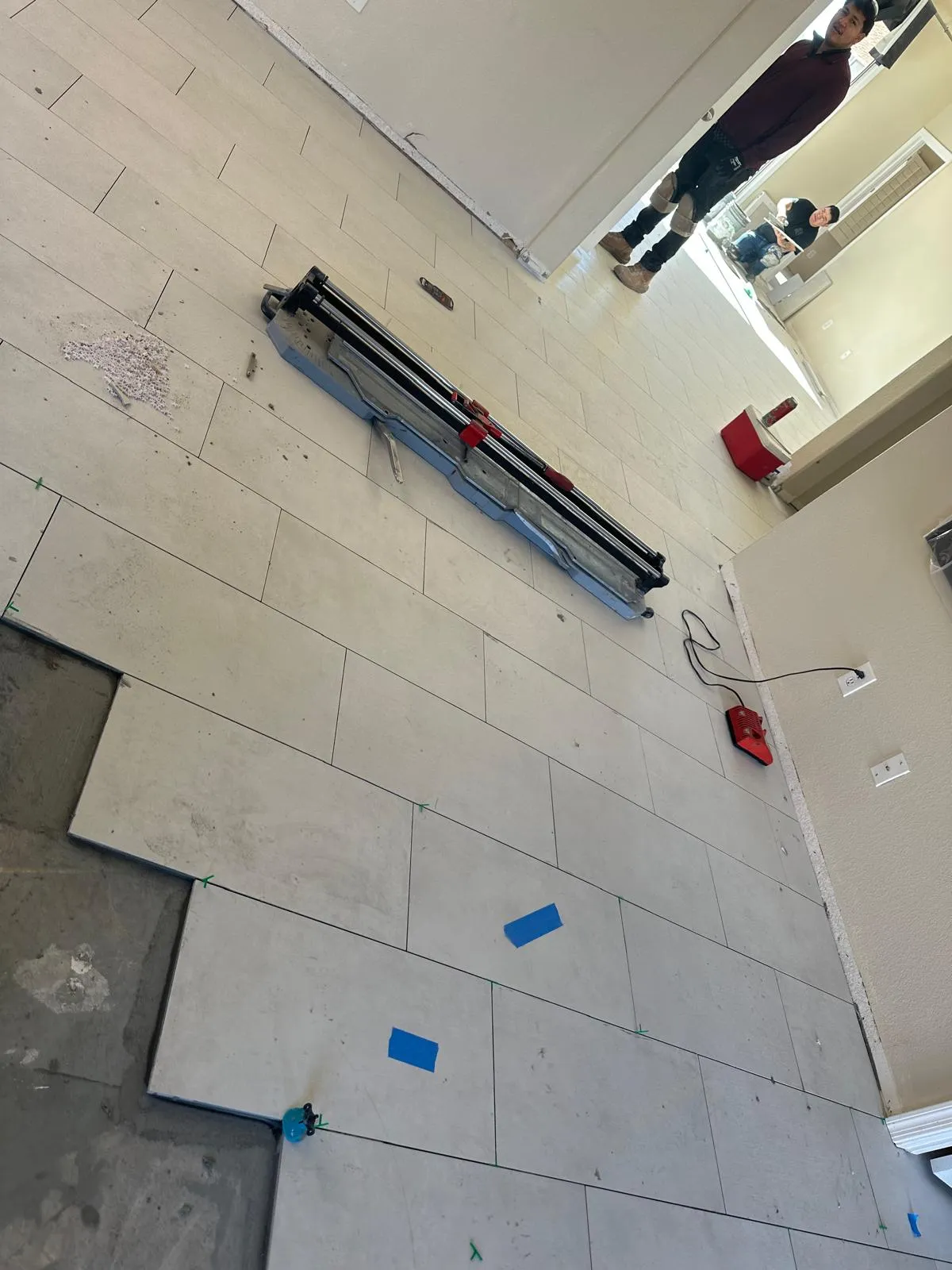
New tile going down over a prepared slab in a Scottsdale home, set with a leveling system.
Tile removal in Chandler is the job RDC is called for most in that city. 54% of Chandler's homes were built from 1970 to 1999 (ACS, median 1997).
In Sun City West, where 83% of homes date from 1970 to 1999 (ACS), RDC can plan a removal around an occupied home. Dust stays contained, and furniture is moved and returned.
RDC also serves Anthem, Glendale, Tempe, Gilbert, Surprise, Sun City, Cave Creek, Fountain Hills, Arcadia, Buckeye, New River and Happy Valley.
One question exposes a shortcut before you sign. Ask any contractor: "After the tile is up, how do you deal with the thinset?" The right answer involves grinding the slab flat. If the answer is "the new floor covers it" or a change of subject, the bumps left behind will become your new floor's problem.
RDC grinds and preps the slab on every removal. Every step is documented with progress photos, so you see the bare, flat slab before the new material goes down.
Read more about LVP flooring installation, compare LVP vs. tile for your replacement, see tile installation in Phoenix, avoid the flooring mistakes we see in Phoenix homes, or explore all flooring installation services. Ready to start? Get a free estimate.