
RDC Renovation & Design Concepts is a flooring contractor in Phoenix, Arizona, that sells and installs flooring, tile and countertops from its Bell Rd showroom. RDC is also asked to replace floors that failed early, so we see the same avoidable mistakes over and over. None of them are about taste. They are about ignoring what the desert does to a floor.
What Flooring Mistakes Should I Avoid in a Phoenix Home?
The five flooring mistakes to avoid in a Phoenix home start with an untested slab, solid hardwood in dry air and glossy dark finishes. The other two are thin LVP wear layers and the wrong grout for hard water. RDC plans around all five from the free in-home measure. Slab leveling runs $1 to $4 per sq ft where needed.
| Mistake | What goes wrong in a Phoenix home | What RDC does instead |
|---|---|---|
| Untested, unleveled slab | Moisture and dips under the floor lead to hollow spots, cracked tile and popped LVP joints | Moisture test, grind high spots and fill low areas ($1 to $4 per sq ft where needed) |
| Solid hardwood in dry air | Planks shrink, gaps open and boards can cup | Engineered hardwood; solid only in rooms kept climate-controlled year-round |
| Glossy or very dark finish | Shows dust, footprints and micro-scratches in strong desert light | A matte or low-sheen finish in a mid-tone color |
| Thin LVP wear layer | Scratches, dents and dulls early under pets, traffic and sun | A wear layer matched to how the room is used and how much sun it gets |
| The wrong grout for hard water | City water of 10 to 17.6 gpg can stain porous grout lines | Grout chosen for each area: cement-based, sealed or epoxy |
1 Skipping slab moisture testing and leveling
This is the mistake RDC's owner sees most, and it is completely invisible once the floor is down. The Phoenix homes RDC works in sit on a slab-on-grade foundation, meaning the concrete sits directly on the ground with no basement.
Moisture can move up through that slab, and an uneven slab leaves hollow spots that crack tile and pop LVP locking joints. Leveling runs $1 to $4 per sq ft where it is needed. Skipping it to save on prep is how a new floor starts failing in its first years. Before we install anything, we test slab moisture following ASTM guidelines, grind down high spots, and fill low areas so the floor sits flat.
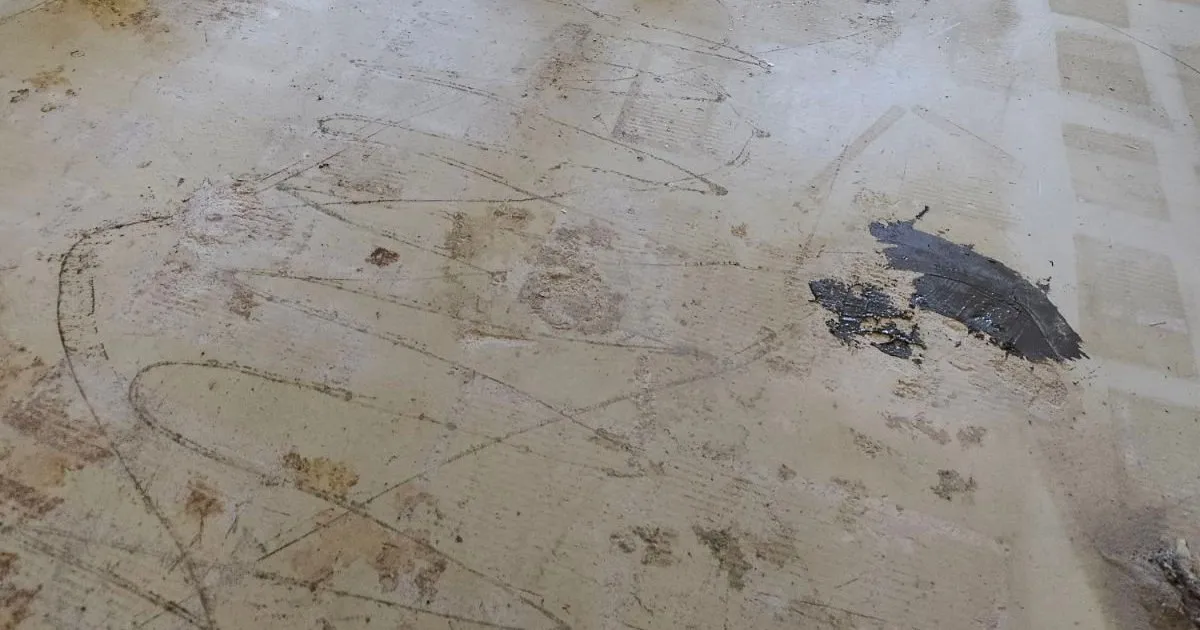
Patching low spots in a slab after RDC took up the old tile, before any new floor goes down.
The test methods and the leveling steps are explained on the slab moisture testing and leveling guide.
Want the slab checked first? On RDC's written estimate, slab prep is its own line. Book a free in-home estimate, or call or text (602) 788-1446.
2 Installing solid hardwood in Arizona's dry air
Solid hardwood is beautiful, but Phoenix's low humidity works against it. Solid wood loses moisture and shrinks in dry air, which opens gaps between the planks and can cause cupping. Rooms with big temperature swings, or rooms not kept climate-controlled, get it worst.
Solid wood on a slab also needs extra steps: the American Hardwood Information Center calls for dry concrete plus the right subfloor and vapor retarder. Solid hardwood can work in rooms kept climate-controlled year-round. For Phoenix slab homes, RDC recommends engineered hardwood, a real-wood surface on a layered core that stays far more stable here.
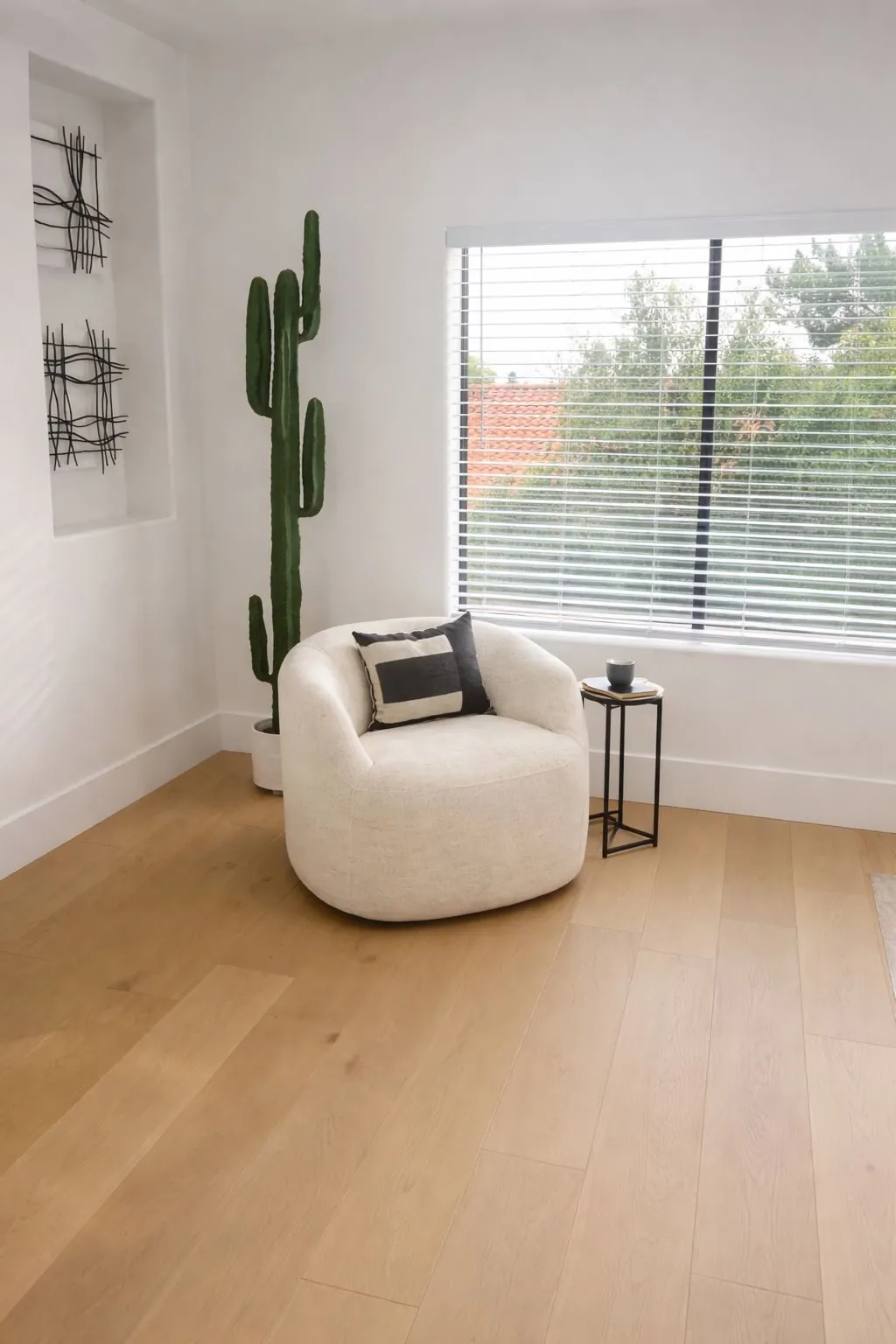
White oak look LVP that RDC installed in a Scottsdale living room.
3 Choosing glossy or very dark floors that show every speck of dust
Phoenix is dusty, and the light through big desert windows is intense. High-gloss and very dark floors look great in a showroom. In a real Arizona home, they show every footprint, dust bunny and micro-scratch.
Homeowners end up cleaning constantly and still feel the floor looks dirty. We usually steer clients toward a matte or low-sheen finish in a mid-tone color. It hides dust and wear between cleanings without giving up the look you want.
4 Buying LVP flooring with a wear layer that's too thin
Not all luxury vinyl plank is the same. The lowest-grade LVP has a thin wear layer that scratches, dents and dulls quickly under Arizona sun, pets and daily traffic. A thin plank over an uneven slab can also show every dip.
Buying on price alone is how people end up replacing a floor twice. We match the wear layer and the product to how the room is used and how much direct sun it gets. See RDC's LVP installation in Phoenix, or compare the real trade-offs in our LVP vs. tile guide.
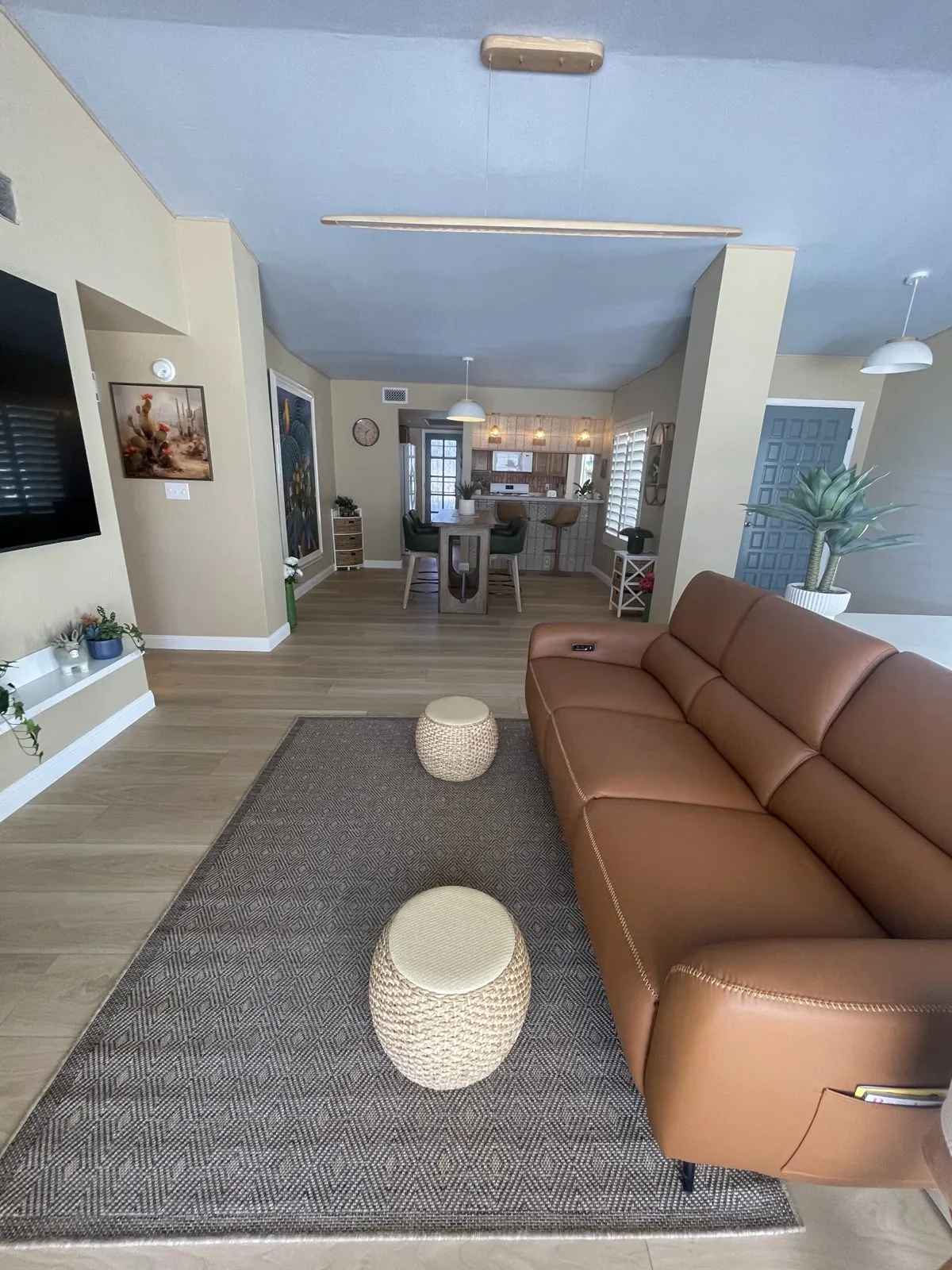
Open-concept LVP running through the living room, dining area and kitchen of a Phoenix home.
5 Choosing the wrong grout for Phoenix's hard water
City of Phoenix Water Services reports 10 to 17.6 grains per gallon in its 2025 water quality report, which is hard water. Standard cement grout is porous unless it is sealed. It can absorb mineral-heavy water and stain over time, especially in entries, kitchens and any area cleaned with a mop.
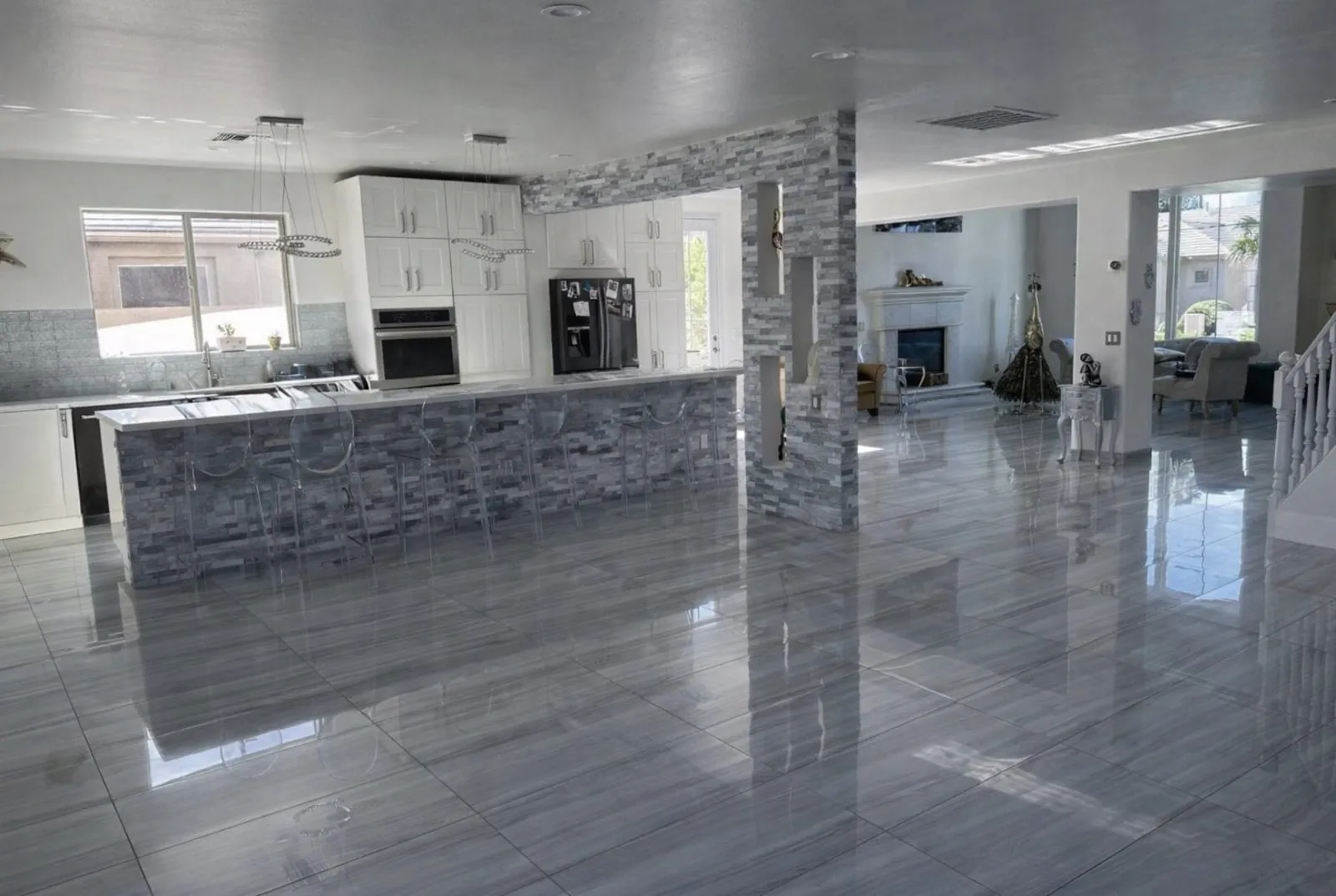
12x24 tile with tight grout lines through an open kitchen and living room RDC installed in Scottsdale.
Stained grout lines make a freshly mopped floor look dirty. RDC chooses the grout for each area, cement-based, sealed or epoxy, with the hard water in mind. RDC also seals natural stone like travertine and marble. Whether floor tile grout needs sealing is answered on our tile installation in Phoenix page.
Choosing tile and grout? Compare tile and flooring samples at the Bell Road flooring showroom, or call or text (602) 788-1446.
The Common Thread: Match the Floor to the Desert
Every one of these mistakes comes from treating a Phoenix floor like a floor anywhere else. The heat, the dry air, the dust, and the hard water all get a vote. The same company sells you the material and installs it. That lets us steer you from a floor that looks good today but fails early, to one that still looks right years later.
Replacing old tile? See tile removal and replacement or porcelain tile. For the full service, see RDC's flooring installation in Phoenix. For material choices, read the best flooring for Arizona heat and how Arizona's climate changes your renovation, then browse real project photos.
Phoenix First: Older Slabs, Hard Water and Dry Air
In Phoenix, the median home was built in 1985, per the U.S. Census ACS 2020 to 2024 (table B25035). Half of Phoenix homes were built in 1985 or earlier, so RDC checks the slab and any original floor to remove before quoting. Add hard city water, dry air, dust and strong sun, and each mistake above has a local cause.
RDC's showroom is in North Phoenix at 1610 E Bell Rd, Suite 101, open Sunday to Friday 10 AM to 5 PM and closed Saturday. There you can compare flooring samples and finishes side by side before you choose. Call or text (602) 788-1446.
Across the Valley, home age shifts the starting point. The median home was built in 1991 in Scottsdale, 1985 in Paradise Valley, 1989 in Mesa and 1999 in Peoria, per the same Census table. RDC serves all four with the same slab and grout checks.