
RDC Renovation & Design Concepts is a flooring contractor in Phoenix, Arizona, that sells and installs flooring, tile and countertops from its Bell Rd showroom. This hard water and heat guide supports RDC's flooring installation in Phoenix service.
Key takeaways
- Phoenix water measures 10 to 17.6 grains of hardness per gallon (City of Phoenix, 2025), hard to very hard on the USGS scale.
- Phoenix averages 111 days a year at or above 100°F (National Weather Service, 1991 to 2020 normals).
- Phoenix footings need only about 18 inches of depth (KJZZ), and the Arizona homes RDC works in sit on a concrete slab, not over a basement.
- Strong sun fades wood finishes and stained concrete; outdoors, RDC uses porcelain its manufacturer rates for exterior use.
- RDC moisture-tests the slab, chooses grout for hard water and backs every installation with a 1-year workmanship warranty.
Does Phoenix Have Hard Water?
Yes, Phoenix has hard water. The City of Phoenix 2025 Water Quality Report lists it at 10 to 17.6 grains per gallon. That is hard to very hard on the USGS scale. RDC Renovation & Design Concepts picks the grout in every Phoenix shower and floor with that water in mind.
The hardness comes from minerals such as calcium and magnesium, which the source water picks up from soil on its way to Phoenix's treatment plants. The City notes it can cause scaling on faucets and showerheads. On tile, the same minerals can leave white buildup on grout and shower glass.
Cement-grouted joints need a grout sealer, while epoxy grout resists stains, per Fine Homebuilding. See how RDC plans for it in bathroom remodeling in Phoenix, or in RDC's walk-in shower installation in Phoenix.
What Is the Hard Water Level in Phoenix?
The hard water level in Phoenix is 172 to 302 ppm (mg/L), or 10 to 17.6 grains per gallon. That range comes from the City of Phoenix 2025 Water Quality Report. The USGS calls 121 to 180 mg/L hard and anything above 180 mg/L very hard. So Phoenix water runs from hard at the low end to very hard.
| USGS Class | Hardness (mg/L) | Where Phoenix Water Falls |
|---|---|---|
| Soft | 0 to 60 | Not Phoenix |
| Moderately hard | 61 to 120 | Not Phoenix |
| Hard | 121 to 180 | Phoenix low end (172 mg/L, 10 grains) |
| Very hard | More than 180 | Phoenix up to 302 mg/L (17.6 grains) |
The City reports both units side by side: 172 ppm matches 10 grains, and 302 ppm matches 17.6. Hardness is not regulated under drinking water health standards, the City notes. The USGS calls it a nuisance rather than a health concern.
In a remodel, the level shows up wherever water dries on a surface. Here is where it shows up in a Phoenix home, and how RDC plans for it:
- Grout: RDC chooses the grout for each area, cement-based, sealed or epoxy, with the hard water in mind.
- Shower glass: Phoenix water leaves mineral deposits on glass over time. RDC can recommend a glass coating that eases cleaning.
- Faucets and showerheads: the City of Phoenix report names them as places hard water can leave scale.
- Natural stone: RDC seals every natural stone floor at installation. See travertine and stone flooring in Phoenix.
Planning a shower for this water? Start with RDC's walk-in shower installation in Phoenix or the full bathroom remodeling in Phoenix page.
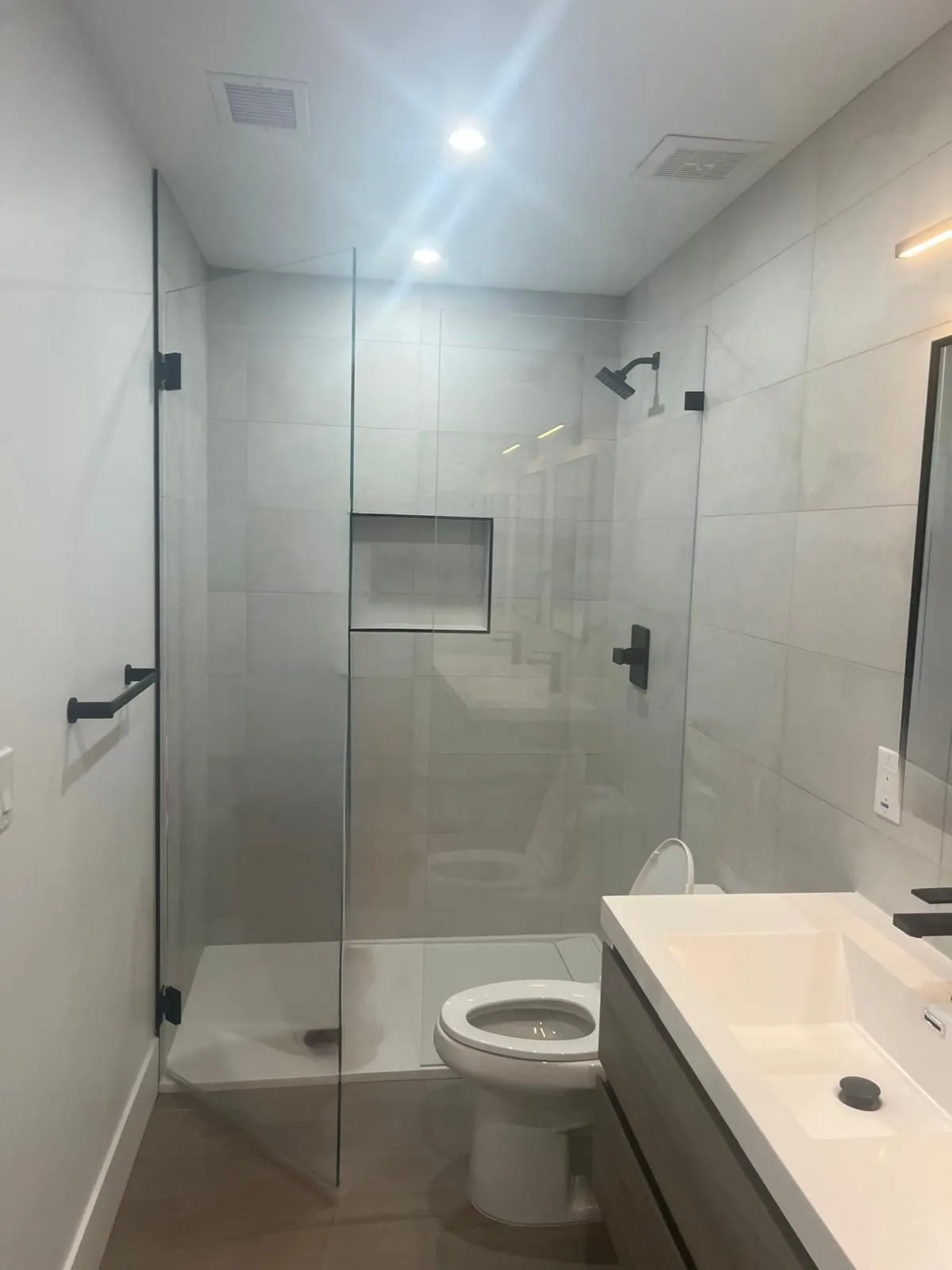
A tub-to-shower conversion RDC tiled in a Scottsdale home, with the grout chosen for Scottsdale's hard water.
The Four Forces That Shape Every Phoenix Renovation
| Force | What It Does | How RDC Builds Around It |
|---|---|---|
| Hard water | 10 to 17.6 grains/gallon (City of Phoenix, 2025) | Grout type chosen for each area |
| Extreme heat | Long summer stretches at 100°F or more | Cool-underfoot tile, heat-tolerant materials |
| Slab-on-grade | Concrete on the ground, no basement | ASTM moisture testing + leveling |
| Intense UV | Fades wood finishes & stained concrete | Porcelain, color fired into the tile (exterior-rated outdoors) |
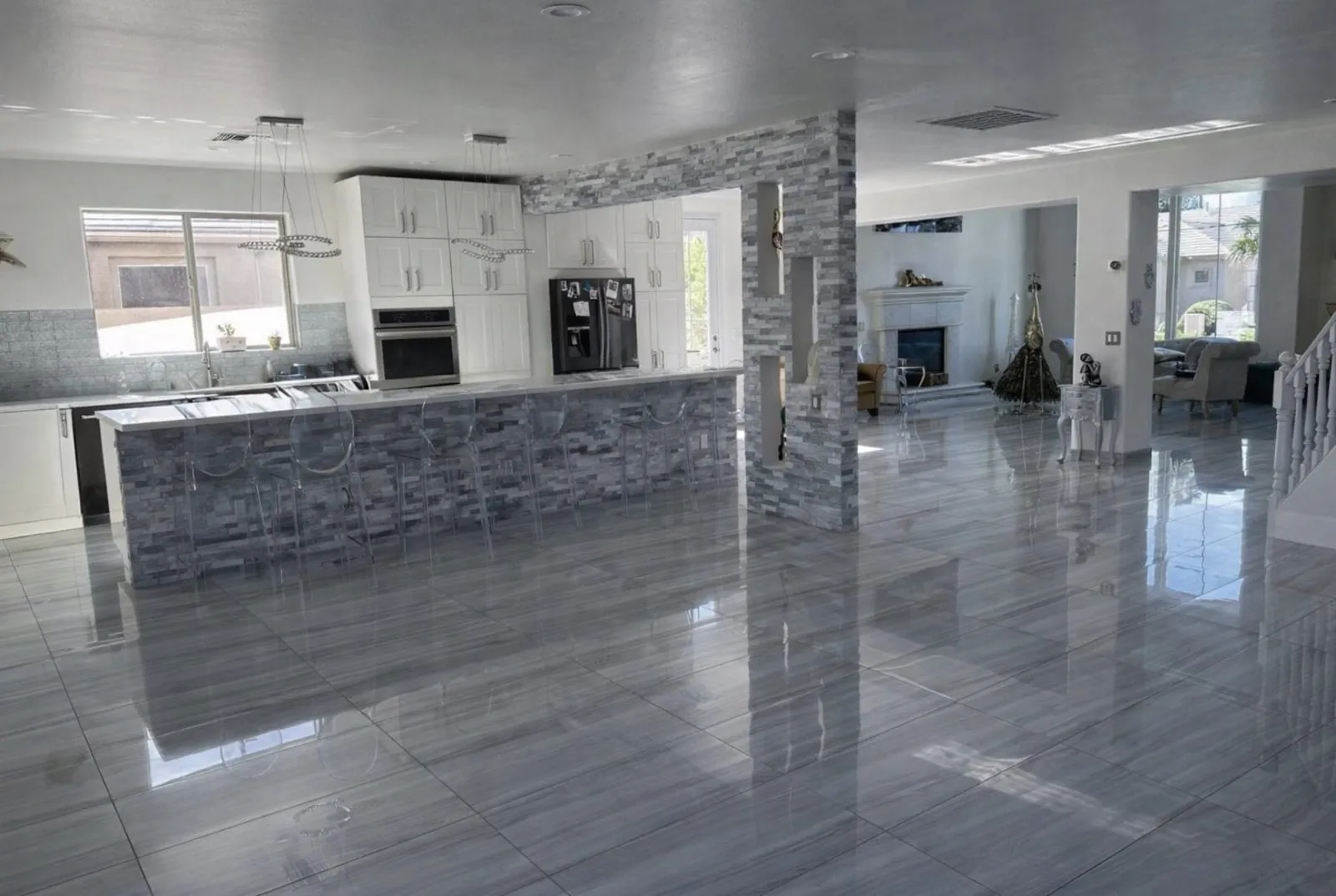
Polished 12x24 tile installed by RDC in a Scottsdale home.
Phoenix Heat: Why Cool-Underfoot Floors Matter
Phoenix averages 111 days a year at or above 100°F and 21 days at or above 110°F, per National Weather Service Phoenix 1991 to 2020 normals. That makes floor temperature a real comfort factor. Porcelain tile and natural stone feel noticeably cooler underfoot than wood, carpet or vinyl in summer.
A house left closed in summer gets very hot inside, which rewards dimensionally stable materials. Vinyl plank moves with heat: Mohawk's SolidTech instructions call for a 5/8 inch expansion gap above 85°F. Compare every option in our guide to the best flooring for Arizona heat.
Why Don't Phoenix Homes Have Basements?
Homes in Arizona very rarely have basements, for three reasons. The ground does not freeze, so footings need only about 18 inches of depth, not 48 to 72. Caliche soil can be hard to dig, and a dig's cost is hard to predict (KJZZ, quoting an ASU architecture professor). So RDC Renovation & Design Concepts lays floors on the slab.
Caliche is soil cemented together by calcium carbonate, in layers from a few inches to several feet thick, per the University of Arizona Cooperative Extension. The Arizona homes RDC works in sit on slab-on-grade foundations, with the concrete directly on the ground and no basement.
Before any floor goes down, the slab must be moisture-tested following ASTM guidelines, ground flat, and leveled. This step is invisible once the floor is in. See how it works in slab moisture testing and leveling in Phoenix.
Eli Kovalev, RDC's owner, says the mistake he sees most in Phoenix is a new floor laid on a slab nobody tested or leveled. A lowball quote that skips it shows the problem only after the floor is down. It's the first thing to ask any contractor about; read why in our guide to choosing a flooring contractor in Phoenix.
Ask for the slab work in writing: get a free estimate that lists slab prep and leveling as its own line, or call or text (602) 788-1446.
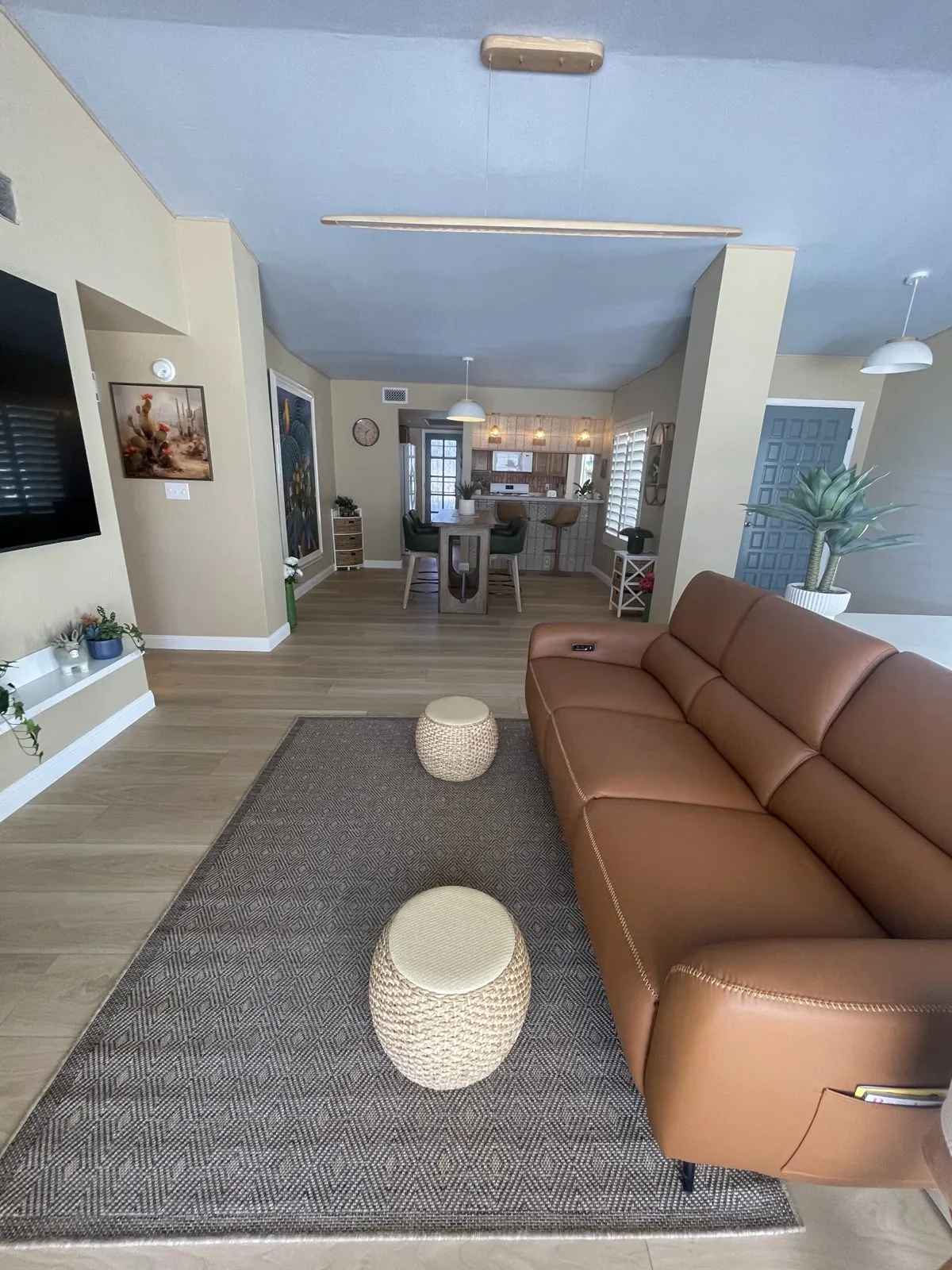
LVP across an open living, dining and kitchen area in a Phoenix home, laid on a slab RDC tested first.
Phoenix Sun and Dry Air: What Fades and What Gaps
Strong sun through big desert windows fades wood finishes and stained concrete. Very dry indoor air shrinks solid wood, which opens gaps and squeaks. The NWFA guideline for wood floors is 60 to 80°F and 30 to 50% relative humidity, and NWFA and hardwoodinfo.com describe engineered hardwood as designed for on-grade slabs.
That is why engineered hardwood suits a Phoenix slab better than solid wood. It is also why RDC uses porcelain, whose color is fired into the tile. Outdoors, use a porcelain its manufacturer rates for exterior use. Explore engineered hardwood, porcelain tile, and travertine & natural stone for the options that suit the desert.
Explore RDC's Climate-Smart Guides by Room
- Flooring: flooring installation, best flooring for Arizona heat, best flooring for pets, LVP vs. tile.
- Bathroom: bathroom remodeling, tub-to-shower conversion, aging-in-place showers.
- Kitchen: kitchen surfaces, backsplash installation, kitchen remodel cost.
- Countertops: countertop installation, quartzite vs. marble vs. granite, quartz vs. granite.
- Outdoor: pool deck & patio tile.
Flooring and tile samples at the RDC showroom, 1610 E Bell Rd Suite 101, in North Phoenix.
Hard Water and Heat Across Phoenix and the Valley
Phoenix. Phoenix's heat and water figures are in the sections above. Half of Phoenix homes were built in 1985 or earlier, the city's median year built in the U.S. Census ACS 2020 to 2024. In an older home, RDC checks the slab again once the old floor comes out.
North Phoenix. The RDC showroom at 1610 E Bell Rd, Suite 101, is open Sunday to Friday, 10 AM to 5 PM, and closed Saturday. Compare porcelain, LVP and wood-look samples side by side, then buy the material and have RDC install it. Visit the flooring store in Phoenix.
Scottsdale. The City of Scottsdale 2026 Water Quality Report lists about 13 to 15 grains per gallon south of Indian School Road. North of it, the report lists 13 to 17. That is 215 to 290 mg/L, very hard on the USGS scale. See home renovation in Scottsdale.
Paradise Valley. The town has no single water utility report, so no one hardness figure applies there. RDC plans the grout for hard water in every home. See luxury flooring and stone in Paradise Valley.
Mesa. The City of Mesa 2025 water quality report lists about 12 grains per gallon in the City Zone and 16 in the Eastern and Southern Zones. See home renovation in Mesa.
Peoria. The City of Peoria water FAQ lists about 13 grains per gallon from the Greenway plant, 17 from Pyramid Peak and 2 to 8 from city wells. See flooring and tile in Peoria.
RDC also serves Arcadia, Cave Creek and Carefree, Fountain Hills, Anthem, Glendale, Chandler and Gilbert. It serves Tempe, Sun City, Sun City West, Surprise, Buckeye, New River and Happy Valley from the same Bell Rd showroom. The same four forces apply across the Valley, and RDC builds around them by default rather than as an upsell.
Ready to start with a contractor who builds for the desert? Get a free estimate, call or text (602) 788-1446, browse the project gallery, or explore financing.